


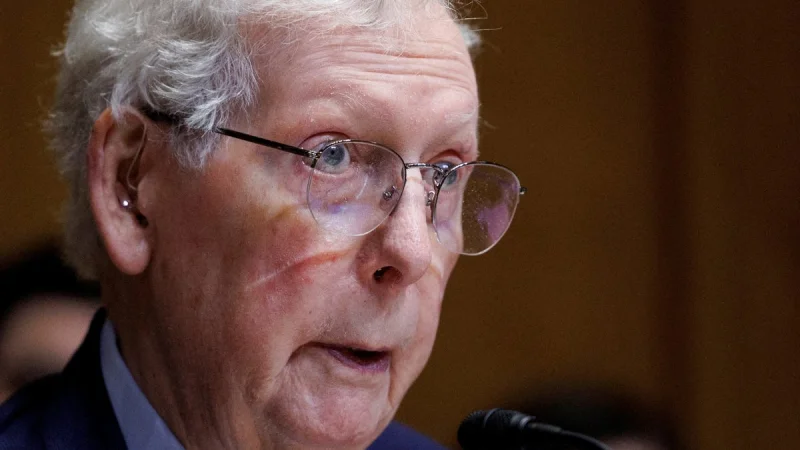
Mitch McConnell has been out of public view for nearly a month after being admitted to a hospital in the Washington area on 14 June, and the silence around his condition has only grown louder. His office says the 84-year-old Senate Republican is continuing to improve, but it still has not said why he remains hospitalized.
The timing matters because the Senate returns on Monday for a four-week session that will be dominated by defence spending, national security and government funding. McConnell’s absence threatens to complicate Republican efforts to move those bills through a chamber where they hold only a 53-47 majority, and he also chairs the Senate rules committee and a defence appropriations panel.
That is why the search around McConnell’s health has sharpened now. With no public appearance since 14 June and no explanation of the illness that sent him to the hospital, even routine questions about his schedule have turned into questions about who is making decisions and how much authority he is exercising from his hospital bed. His office says he remains engaged with Senate business and is working closely with staff on Senate and Kentucky matters while recovering.

The gap between that reassurance and the public record has fueled the unease. Emergency dispatch audio obtained by media outlets indicated that first responders were sent to his home after reports of an unconscious person, and that CPR was under way. later released video on Friday showing a person on a stretcher being wheeled toward an ambulance, though the face was not visible. The office has not addressed that footage or explained why McConnell remains in hospital nearly a month after he was admitted.
McConnell has drawn public concern from across Kentucky and Washington. Andy Beshear published an open letter urging him to reassure constituents, writing that Kentuckians have grown increasingly concerned about his health, well-being and ability to hold office. John Thune and John Barrasso said this week that they had spoken with McConnell and described him as alert and engaged in discussions about current events. Donald Trump, by contrast, said, “I have no idea how he’s doing.”
What happens next is plain enough: the Senate comes back Monday, and the longer McConnell stays silent, the harder it becomes to separate a private recovery from a public job that is about to be tested by spending fights, a 1 October deadline and the possibility that another temporary measure will be needed to avert a government shutdown. For now, the unanswered question is not whether McConnell is still a Senate figure. It is whether he can return to being one in time to matter.
