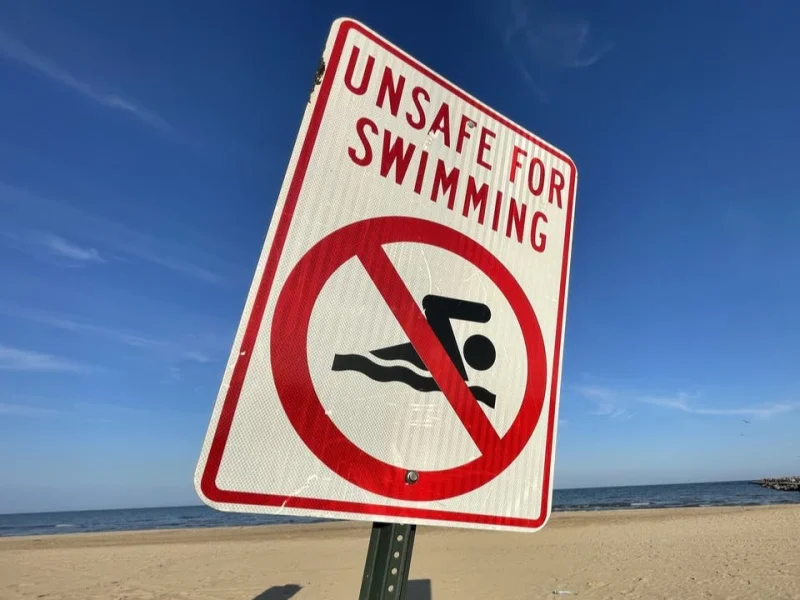
More than 60 Massachusetts beaches were declared unsafe for swimming on Thursday after torrential rains, storm runoff and contamination linked to the Merrimack River pushed water quality into danger territory. The closures stretched across the North Shore, Cape Cod and South Coast, while some beach areas could still stay open for recreation even as contact with the water was strongly discouraged.
The timing matters because beach closures after heavy rain are not random. Storm runoff typically affects beach water for 48 to 72 hours after a rain event, and water test results can lag for up to two days after samples are taken when bacteria levels are high. That leaves beachgoers dealing with a warning that can trail the weather by more than a day, just as people are looking for places to go after the rain clears.

Dozens of beaches were added to the list after up to 6 inches or more of rain fell across the region on Monday and Tuesday. The closures also came amid ongoing dilution in the Merrimack River from last week's sewer overflow, and Plum Island beaches were still closed nearly two weeks after the Haverhill wastewater rupture. The pattern shows how one storm can trigger a chain of water-quality problems that lasts long after the sky opens up.
The bacteria used to judge beach water are Enterococci and E. coli. Marine beaches are tested for Enterococci, while freshwater beaches are tested for E. coli or Enterococci, and elevated levels mean the water may not be safe for human or animal contact. That is why a beach can remain partly usable for a walk or other recreation while the water itself stays off-limits. For swimmers, the practical answer is simple: the warning is not a formality, and the closure can outlast the rain by days.
What remains unresolved is how quickly the water will recover. With storm runoff often lingering for 48 to 72 hours and test results taking up to two days to come back, reopening decisions can move slowly even after the weather improves. Until then, the beach map across Massachusetts is likely to stay uneven, with some stretches open on land and the water still closed to anyone who wants to get in.