


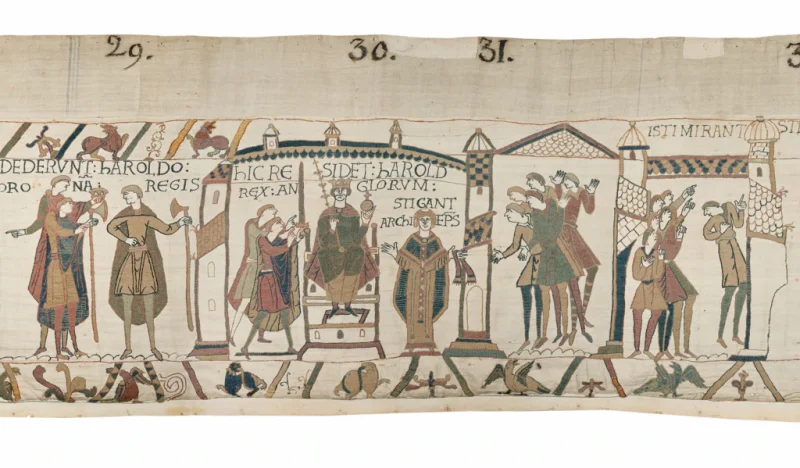
The Bayeux Tapestry reached the British Museum at 02:50, driven into a loading bay from a secret location in northern France under police guard. It is the first time the 70-metre 11th-century embroidery has been back in the UK since it is believed to have been created there nearly 1,000 years ago.
The museum will put the tapestry on display in September, turning an overnight delivery into one of the most closely watched cultural arrivals in years. The work depicts 58 scenes leading up to the Norman Conquest of England in 1066, and the timing matters because the loan is now real, visible and moving toward public view rather than remaining a diplomatic promise.
Nick Cullinan said the arrival was “something rather extraordinary” and called it a return to England for the first time in almost 1,000 years. Millie Horton-Insch, who was there to see it come in, said she “did well up a little bit” as a lorry reversed into the bay and a box was removed, adding that the scale of the object and how close it was made to the events it records made the moment feel profound.
That emotion sits alongside unease. The nine-month loan was finalised last year by Emmanuel Macron and Sir Keir Starmer and is backed by the French government, but there has been disquiet in France over moving a work described as fragile and historically important more than 300 miles to the UK. The Bayeux Museum in Bayeux, Normandy, where it has been exhibited since 1983, is closed for renovation, and the tapestry had been kept on the folding stand it was taken down from display on last year before being placed in a temperature- and humidity-regulated crate and then an outer cage for transport.
The British Museum is also sending treasures back, including items from the Sutton Hoo hoard and the Lewis chess pieces. With the tapestry now inside the museum, the question is no longer whether it will come to England, but how the institution will show a work this old, this long and this fragile without putting it at risk before September.
For now, the sight that mattered was simple: a sealed box, a loading bay and a 70-metre thread of history back on English soil.
