


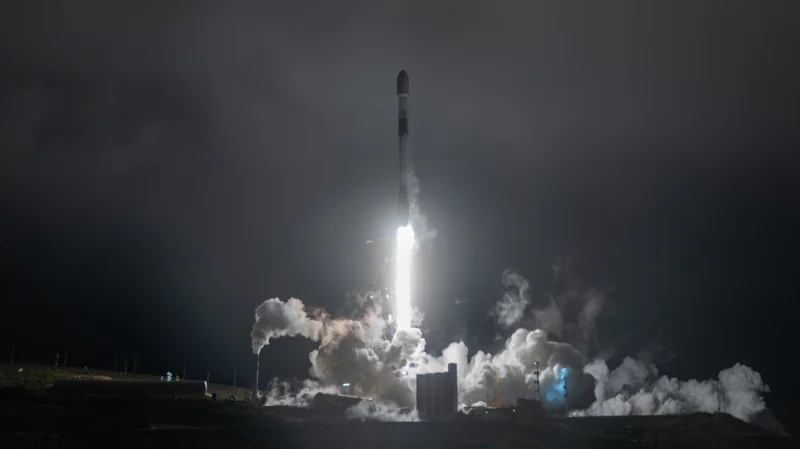
SpaceX launched Transporter-17 from Vandenberg Space Force Base in California on July 7, sending 81 payloads toward sun-synchronous orbit on a Falcon 9 that lifted off at 3:12 a.m. Eastern. The mission was another full rideshare flight for the company, but it landed in a week when customers were already asking whether the Transporter line will keep going much longer.
That is why the Falcon 9 Starlink Vandenberg keyword is being searched now: the launch happened, and so did the questions around it. SpaceX said the flight carried hosted payloads and spacecraft riding on orbital transfer vehicles for later deployment, including CAS500-4, a 514-kilogram South Korean imaging satellite used for agricultural and forestry applications; four radar-imaging satellites for Iceye; 10 Lemur satellites for Spire; and seven GRUS-3 medium-resolution imaging spacecraft for Axelspace. Another Falcon 9 launched CAS500-2 on a rideshare mission in May, a reminder that the manifest is still moving even as customers wonder how long it will remain open.

The company has long framed rideshare launches as a way to expand access to space for smaller operators, and on the webcast a host said missions like this significantly increase access around the world. But the market conversation is moving in a different direction. Adam Spice said there has been a lot of concern about Transporter missions and whether they will continue to be made available, and he described customer conversations about access to Falcon 9 over the last three to six months as anxiety, saying there seemed to be a panic setting in. He also said SpaceX officials last year described Falcon 9 as near its peak launch activity and expected launches to start declining as Starship ramps up.
That shift is what gives the launch its edge. Several partners and customers say SpaceX is not accepting Transporter reservations beyond late 2028 or early 2029, and the missions already on the manifest through that window are nearly full. Exolaunch and SEOPS have bought their own Falcon 9 rideshare launches, which suggests some buyers are no longer waiting to see how the program evolves. SpaceX has not commented on those claims, leaving the most important question in place: whether Transporter remains a long runway for small satellite operators or a program that is already being quietly rationed as Falcon 9 is pulled toward Starlink and other internal uses.
For now, the July 7 launch shows that the rideshare system is still working and still busy. What it does not settle is whether customers looking for Falcon 9 access in the next few years will find a normal booking process, or a closing door.
