


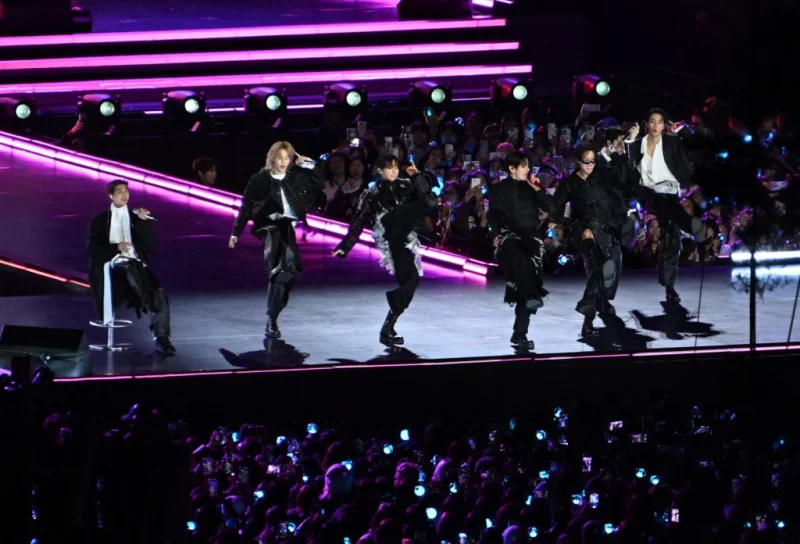
Three songwriters filed a BTS Swim HYBE copyright lawsuit on Wednesday, July 8, accusing HYBE, HYBE America and Big Hit Music Co. of copying their unpublished demo for BTS’s chart-topping song “Swim.” The plaintiffs, Steve Cooper, Jon Sandler and Greylyn Johnson, say the hit lifted key elements from their own track of the same name.
The complaint lands now because “Swim” is not just any album cut. The BTS song debuted at No. 1 on the Hot 100 this spring as the lead track off ARIRANG, and the filing seeks to tie that commercial success to an earlier work that the three writers say was already circulating in March 2025. Johnson is one of the named plaintiffs who says copies of the demo were sent out to parties for review before the dispute turned into a federal case.
At the center of the filing is a claim that the similarity is too close to dismiss as coincidence. The complaint says that after listening several times, the writers reached what they considered the obvious and inescapable conclusion that the BTS track copied their work in very large part. They also say a musicologist, Alexander Stewart, found that the BTS version contained numerous elements taken from the demo, including the signature phrase tied to the title, unusual harmonies, textures, and rhythmic and lyrical elements.
That report gives the plaintiffs their sharpest language. Stewart said the similarities are unique in the aggregate and distinctive individually, and concluded that independent creation by BTS can be ruled out. The defendants have not yet answered in public; reps for HYBE, APG and Tedder did not immediately return requests for comment. BTS and its members were not named as defendants, even though the lawsuit also names Ryan Tedder among the songwriters behind the track.
The hard part for the plaintiffs is proving access, not just resemblance. Copyright cases often rise or fall on whether the accused side had a real path to hear the material they are said to have copied, and that point can be difficult to establish. The complaint says the demo was sent to execs at Artist Publishing Group, who listened to it and shared it with others, while the plaintiffs also contend defendants either did not respond or could not reach a resolution, forcing the filing. In the months ahead, the defendants are expected to file formal arguments seeking dismissal, and that will test whether the alleged similarities are enough to move the case beyond suspicion and into liability.
