


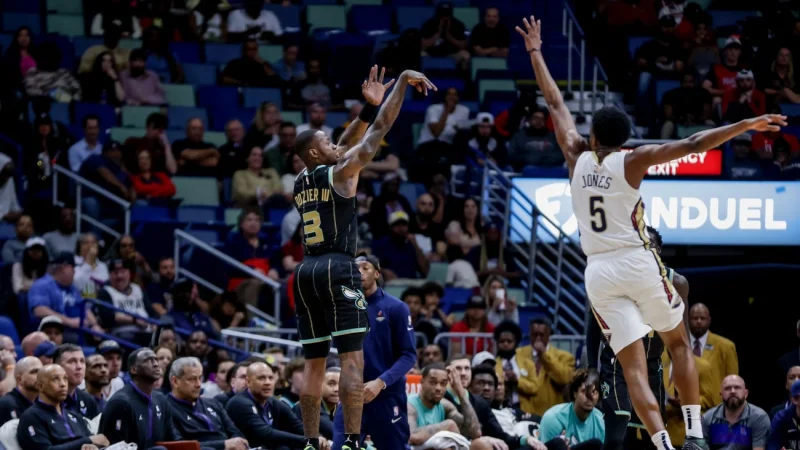
A federal judge on Wednesday refused to loosen Terry Rozier’s bond conditions, keeping in place the no-contact order that bars him from reaching out to 12 players while he awaits trial. U.S. District Judge LaShann DeArcy Hall did not accept the argument that the restrictions should be eased so he could return to basketball.
The decision matters now because Rozier’s lawyer had asked for a change on the ground that the restrictions, together with a travel ban to Canada, have effectively ended his NBA career. He is out on a $3 million bond secured by his South Florida home, and the court already has ruled that he cannot contact former players who could be witnesses at his February 2027 trial.
Rozier is fighting charges that include bribery in sports, honest services wire fraud and money laundering conspiracy, and he has pleaded not guilty. The bond also bars him from gambling in person and online. At the center of the judge’s ruling was one detail that cut against the defense: Rozier replied this spring to a text message from someone on the no-contact list.

Hall said there was “no question” that he contacted them and said the episode showed he believed he knew better than the court. She also said, “Unless you're suiting up, that doesn't help me,” when defense lawyer David Markus pressed for a way to let Rozier play while the no-contact restriction stayed intact.
That is where the case now stands. The judge tabled the international travel issue for another time if Rozier is picked up by another team, but for now the restriction remains, along with the ban on contacting 12 players, including seven former Charlotte Hornets teammates. The players are scattered across four different teams, which is part of why the defense says the order is so hard to live with, but the court was not moved by that argument after the text exchange.
Rozier was waived by the Miami Heat in April and is now a free agent, so the ruling leaves him in a difficult place: unable to contact potential witnesses, unable to gamble, and unable to persuade the court that the bond terms should bend around an active career. Unless something changes before February 2027, those same restrictions are likely to shadow the case all the way to trial.
