


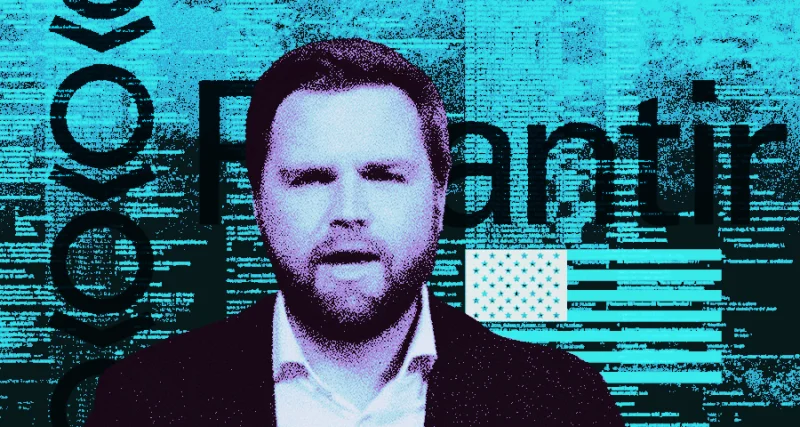
The Trump administration is expanding its use of Palantir across multiple agencies and departments within the federal government, and that move is now drawing fire from right-leaning media figures who say it looks like a step toward a surveillance state. The criticism has also turned toward Vice President JD Vance, whose ties to Palantir have made him a target in the fight over how far the company should reach inside government.
The backlash matters because it is landing while the administration is widening Palantir’s footprint at the same time that some conservatives are openly warning about what they see as the dangers of handing too much power to the company. For those critics, the issue is not just software or data systems. It is the fear that a future President Palantir could emerge from a network of tech influence that some commentators now describe as the work of the ultimate deep staters.

That argument has been sharpened by the language used against Vance himself. Some right-leaning commentators have called him a pawn of the ultimate deep staters, while others have described Peter Thiel and Alex Karp as the ultimate deep staters behind the company’s rise. The same voices have warned that the goal of such tech companies is to make it so Americans cannot live or do anything that feels human. In that telling, Palantir is not just a contractor. It is a symbol of a political and technological project that makes ordinary people feel watched.
But the criticism is far from unanimous. Other conservative figures have brushed aside the surveillance concerns and argued that attacks on Palantir would leave the United States weaker in the artificial intelligence race with China. That split has become the real story: one side sees a creeping security state, and the other sees a strategic tool the country cannot afford to fear. The result is an emerging divide among right-leaning figures that could shape how much room Palantir gets as the Trump administration keeps expanding its use.
What remains unresolved is whether the backlash will stay as commentary or turn into a broader political problem for JD Vance and the administration. For now, the pressure is building in public, and the fight over Palantir is no longer just about technology.
