


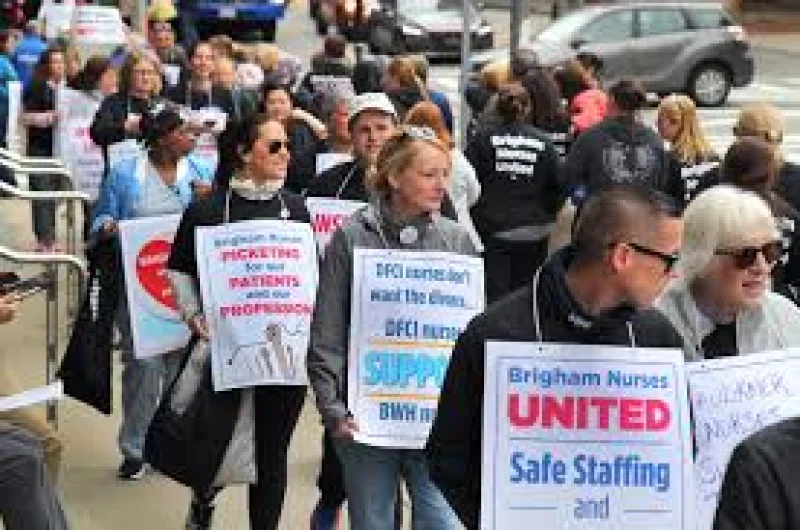
About 4,000 unionized nurses at Brigham and Women’s Hospital were set to walk off the job on Wednesday in a one-day Brigham nurses strike that would become the largest nurses strike in Massachusetts history. The walkout was to be followed by a four-day lockout, with nurses expected back on July 13.
The dispute has been building for months between the Massachusetts Nurses Association and Mass General Brigham, which says it has lined up temporary replacement nurses and that patient care should not be affected. The hospital was contractually obligated to provide replacement nurses for five days of work, covering the strike and the lockout that follows.
What pushed the talks apart was pay and health insurance costs. The union wanted a 3 percent raise for the first six months of the contract and a 4 percent raise for the next 12 months, while management offered no new across-the-board raise. Brigham said nurses already receive a 5 percent increase on the yearly anniversary of their hiring until they reach two decades of service, a system it says makes its nurses among the highest paid in the state.

The health plan fight was just as sharp. Management wanted nurses enrolled in Harvard Pilgrim Health Plan to pay 2.5 percentage points more of their monthly premium. That proposed increase would hit more than half of the membership, making it a real money squeeze for a workforce already arguing that wages have not kept pace with living costs.
Jennifer DeVincent, a union leader, said Brigham was "shelling out money to hire these scab nurses" instead of providing cost-of-living increases, and said the hospital was paying for flights, hotels and food for replacement workers. "It’s just crazy," she said. Jessica Pastore said the hospital needed major preparation to keep patients safe during a strike, but added that those costs were temporary and tied to a defined stoppage period, unlike a permanent wage increase that would compound year after year.
That contrast sits at the center of the standoff. The hospital says it is spending what it must to keep service running; the union says those dollars should go to the nurses who work there every day. Governor Maura Healey brought representatives from Mass General Brigham and the Massachusetts Nurses Association together on Monday, but no additional bargaining sessions were held Tuesday.
The bigger picture is that Brigham and Women’s Hospital is one of Mass General Brigham’s flagship hospitals, and the labor fight there is unfolding alongside a separate planned walkout by a newly formed home care workers chapter. For the Brigham nurses, the key question is no longer whether the strike is historic. It is whether the hospital and the union can move from a locked-out standoff back to a contract before July 13.
