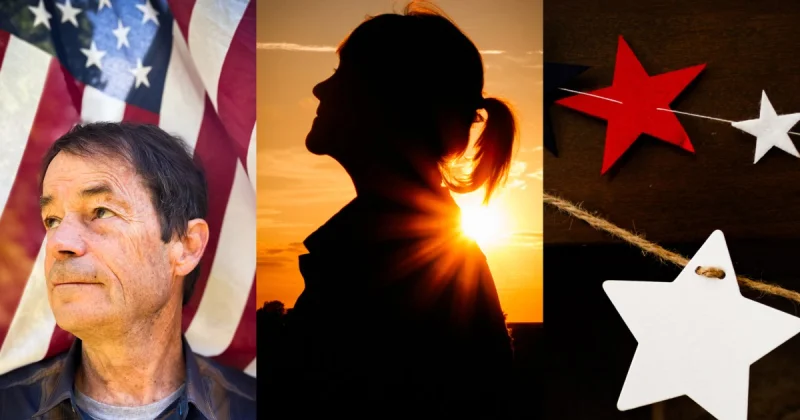
American flags were everywhere this Fourth of July weekend as the United States marked its 250th birthday, but the Flag Of The United States now carries a political charge that would have been hard to imagine a generation ago. Bill LeBeau said that makes him sad, and he remembers a time when, as he put it, everybody in the country knew what the flag was.
The timing matters because the symbol is showing up most visibly on a holiday built around national unity, even as the country is divided over what that unity means. In an April survey by The and the National Opinion Research Center at the University of Chicago, about 70 percent of Republicans said they fly the flag at least during national holidays, along with about 60 percent of Americans ages 60 and older. About 60 percent of Democrats and independents said they never fly the flag, including about 75 percent of Democrats under 45. Only about 30 percent of Black adults said they ever display the banner.
The split is striking because the flag was meant to stand above the fight. The Founders settled in 1777 on the basic elements still used today: 13 stars and 13 stripes representing the rebellious Colonies. Peter Drummey of the Massachusetts Historical Society said it seemed odd that the Revolution went on for a couple of years before the country had what looked like an essential symbol. He said people can agree what a symbol is, but not what it is symbolizing, and for him the banner points to free speech and equal rights for the people under it.
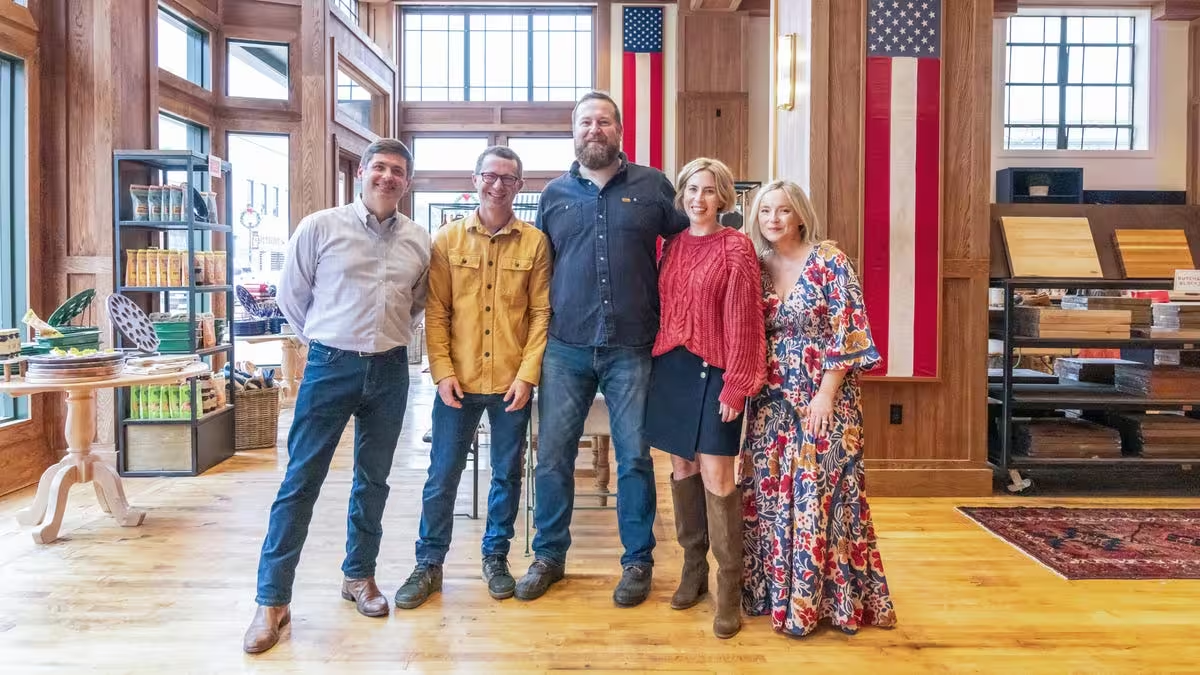
That wider disagreement is what has pulled the flag into politics. On the right, politicians wrap themselves in it to proclaim their love of country. On the left, protesters wave it at mass demonstrations as a rallying cry to protect or expand American rights. The same cloth that once served as a common national emblem now carries partisan, demographic and racial overtones, which helps explain why the question of whether to fly it at home has become loaded in ways it was not before.
For veterans, the meaning can be sharper still. Jack Hammond of Home Base said the flag has a very special place for veterans, and he recalled that when he was serving overseas, American flags were not supposed to be put up but were put up anyway. After a firefight in Fallujah, he said, coming back to the base meant one thing: you knew you were home. That is the promise the flag still holds for many Americans, even as a growing share of them no longer see it the same way.
The result is a symbol that still reaches across the country, but no longer speaks with one voice. What used to signal a shared identity now also signals where people stand in the country’s arguments, and the most urgent question is no longer whether the flag matters, but whether Americans can still agree what it is supposed to mean.