


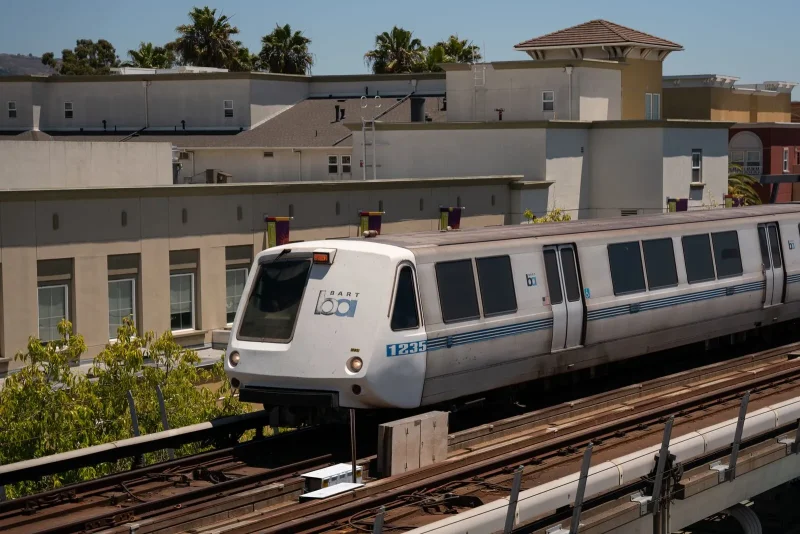
The Metropolitan Transportation Commission said Connect Bay Area has qualified for the November 2026 ballot after election officials validated more than 300,000 signatures, clearing the way for a vote on a new tax plan for Bart and other transit agencies. The signature total was about 66% above the number needed to advance.
The measure would add a 0.5% sales tax in Alameda, Contra Costa, San Mateo and Santa Clara counties, along with a 1% sales tax in San Francisco, and is projected to raise $14 billion for mass transit over 14 years. For Bart and AC Transit, the stakes are stark: Bart has warned it could close stations and eliminate weekend service without new money, while AC Transit has said whole lines would be cut.
This is why the qualification matters now. Bay Area transit agencies are trying to sell Connect Bay Area as a shared bailout plan at a time when ridership remains weak and costs keep rising. The measure is also headed to voters after several tax initiatives in the counties that would have to approve it were rejected in June.
Carter Lavin pointed to that mixed record as evidence the regional plan still has room to build support. He said the only transit-related tax measure on the June ballot, the SMART sales tax in Marin County, passed with 70% of the vote, and that Measure G in Contra Costa County failed even though it cleared the 50%-plus-one threshold that Connect Bay Area would need. He also said the measure is backed by labor, businesses, progressives, immigrant rights groups, health groups and housing groups.
The contrast is not hard to see. Voters in some counties just turned down tax proposals, yet the transit coalition backing this one says it has momentum and enough range to survive November 2026. Lavin said the difference can come down to whether there is organized, funded opposition, a point that underscores how much the campaign will depend on turnout, message discipline and whether voters decide transit is worth paying for now.
For now, Connect Bay Area has crossed the first hurdle. The next one is harder: persuading voters in Alameda, Contra Costa, San Francisco, San Mateo and Santa Clara to approve a tax increase that would keep Bart, AC Transit and other systems from cutting deeper into service.
