


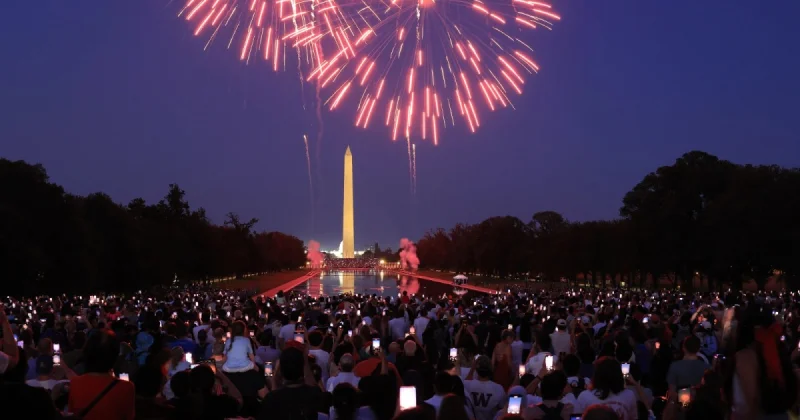
Washington’s July 4th celebration is headed for a collision of heat, smoke and scale on Saturday, with experts warning that the National Mall fireworks could trap toxic plumes over the city. The show has already been pushed to 11 p.m. because President Donald Trump is expected to speak for about 45 minutes first.
That delay matters because the forecast high is 100 degrees and the heat index is expected to climb well above that, leaving little margin for a crowd that will sit through the day and wait for a late-night launch. Trump has called the event “the most spectacular TRUMP RALLY of them all,” and the production company building out the country’s marquee 250th anniversary event was still recruiting crowd-management help on Wednesday.
At the center of the planning is a display unlike the usual Washington July 4 show. More than 850,000 fireworks will launch from 10 sites over roughly 40 minutes, a sharp jump from the typical 20-minute show that reportedly uses about 20,000 pyrotechnics. Pyrotecnico co-produced Saturday’s display, and its CEO, Stephen Vitale, said the plan is to make it “the greatest fireworks display ever displayed in the United States and the world,” adding that the show will break a world record.

The scale is what has set off the alarm. Air-quality experts said the combination of record-breaking fireworks and 100-degree heat creates a perfect storm for vulnerable people, especially the elderly and those with asthma. The concern is not only the smoke itself but the weather pattern around it: a hot afternoon, a late start and the chance of thunderstorms at night could all make the evening harder to manage once the crowd is already in place.
Organizers say they are preparing for the load. More than 500,000 water bottles are already on hand, hundreds of thousands more are expected before Saturday, and the build-out includes huge air-conditioned tents. Even so, the event is being sold as historic at the same time that sources familiar with the production have raised questions about the same organizers behind The Great American State Fair handling the July 4th celebration. That contrast is hard to miss when the event is being framed as a national showcase, yet still needs extra recruiting for crowd control.
Saturday’s fireworks will go off whether the preparation feels adequate or not. The unanswered question is whether water, shade and security can keep pace with a show that is bigger than usual, later than usual and arriving on one of the hottest July 4ths Washington has faced.
