


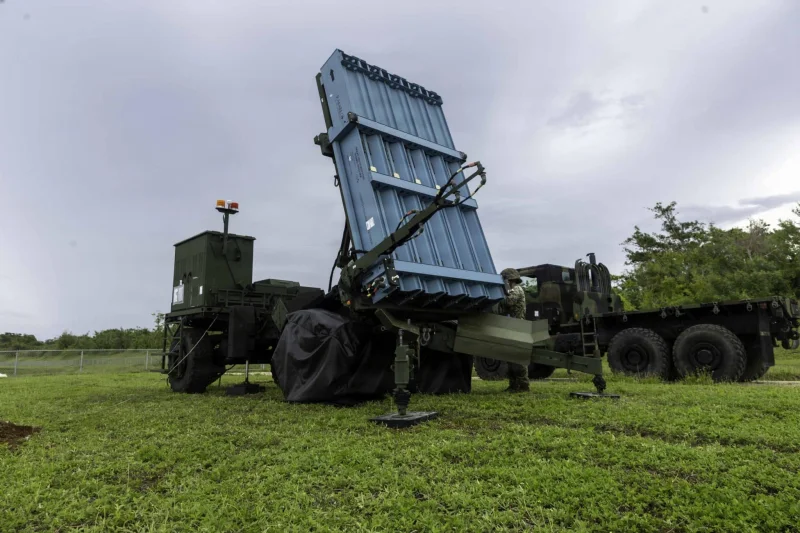
III Marine Expeditionary Force personnel have deployed to Guam with an MRIC battery, and that battery is now slated for a live-fire demonstration during Exercise Valiant Shield 2026. The move puts one of the island’s newest missile defense pieces in front of the test that matters most: whether it can fire, track and work as part of a wider shield under exercise conditions.
The timing is no accident. Several anti-missile system tests are set to begin in late June during Valiant Shield 2026, a large force employment field exercise built to stress U.S. Pacific Command’s tactics and strategy in a high-intensity conflict. Live fire tests of the U.S. Marine Corps’ MRIC and the U.S. Army’s PATRIOT system are scheduled during the exercise, with additional testing due a few hundred kilometers south in Palau in late July.
Turner cast the deployment as part of a broader modernization push. “Our modernization efforts and forward posture send a clear message to the region,” he said, adding that the MRIC strengthens the ability to stand with allies and partners. He also said III MEF is “ready and able to answer the call in times of crisis.”

That readiness is being tested against a system still under construction in more ways than one. The Guam Defense System is being built around distributed radars, hardened missile launchers and underground bunkers, with the U.S. Army’s Portfolio Acquisition Executive Fires leading evaluations through August. A composite Patriot anti-ballistic missile unit has not yet deployed, even as hardened shelters and stands for it are being built this summer. In October, Task Force Talon is scheduled to be redesignated as the 3rd Battalion, 43rd Air Defense Artillery Regiment.
That is the friction inside the plan: Guam is meant to present a unified picture to incoming threats, but the architecture is still in evaluation and some of its pieces are not in place yet. The MRIC battery’s live-fire run will show more than whether the interceptor launches cleanly. It will also show how quickly the network can stitch sensors, shooters and command links into one system that can hold together under pressure.
What comes next is the part that will decide how much of this becomes a working defense and how much remains a demonstration. If the late-June tests and the Valiant Shield live fires show the systems can engage, coordinate and keep pace with the exercise’s demands, the case for initial operational capability gets stronger. If they do not, Guam’s layered shield stays a work in progress, even as more tests roll forward into July and August.
