


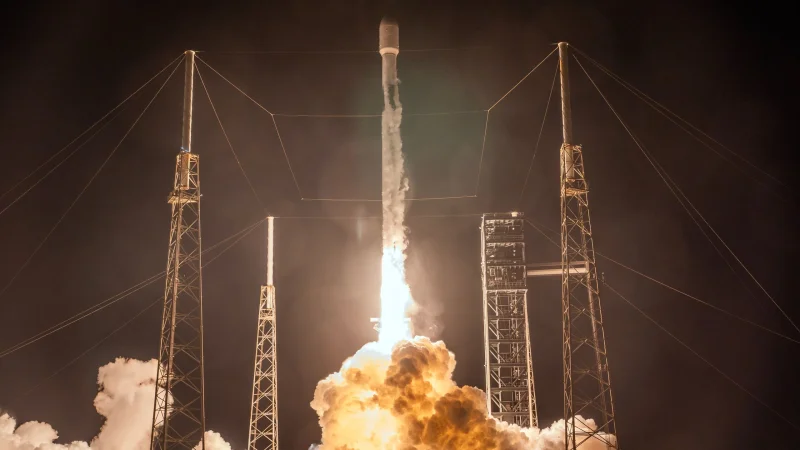
SpaceX launched SiriusXM’s SXM-11 satellite Sunday night aboard a Falcon 9 rocket from Cape Canaveral Space Force Station, sending the radio-broadcasting spacecraft toward orbit as part of a fleet refresh that has been years in the making. The liftoff from Space Launch Complex 40 came at 10:25 p.m. EDT, after a four-hour launch window opened with weather judged favorable.
The satellite is meant to replace two aging spacecraft in geostationary Earth orbit, a swap SiriusXM is making because the older pair has been carrying service for years while demand for reliable coverage keeps growing. SiriusXM said SXM-11 is its most powerful high-powered satellite, built to improve signal reception, expand coverage in Alaska and support audio entertainment and information services across the United States, Canada and the Caribbean.
The mission also showed how much work SpaceX is trying to squeeze out of its Falcon 9 fleet. Booster B1085 flew for the 17th time and touched down on A Shortfall of Gravitas in the Atlantic Ocean a little more than 8.5 minutes after launch, marking the booster’s 158th successful landing. SXM-11 separated from the upper stage a little more than half an hour after liftoff, after which SiriusXM said the satellite would begin its journey to orbit.

The replacement plan is straightforward on paper, but the math behind it matters. SXM-11 and SXM-12 are meant to take over for XM-5 and Sirius FM-5, satellites that launched in 2010 and 2009, respectively, while SXM-10 went up in June 2025 and is expected to remain in service until 2040. SXM-11 itself weighs about 15,000 pounds, or 7.5 tons, is based on the IM-1300 satellite bus and stretches 230 feet tall with its solar panels extended, a sign of how much of the spacecraft is devoted to keeping it on station.
There is also a different kind of pressure hanging over SpaceX right now. NASA and SpaceX officials were moving forward with preparations for the next commercial Crew Dragon mission to the International Space Station next week after a Flight Readiness Review on Thursday, even as SpaceX awaited a final evaluation of a discovery that it may have been loading slightly more propellant than expected into its Falcon 9 rockets. That leaves one company pushing ahead on commercial launches while still trying to close out a question that could reach beyond this satellite mission.
For SiriusXM, the Sunday night launch is less a finish line than a handoff. SXM-11 is now on the path to assume duties from hardware built in another era, and the next step is whether SpaceX’s Falcon 9 record and the company’s own launch cadence can keep that replacement schedule moving without disruption.
