


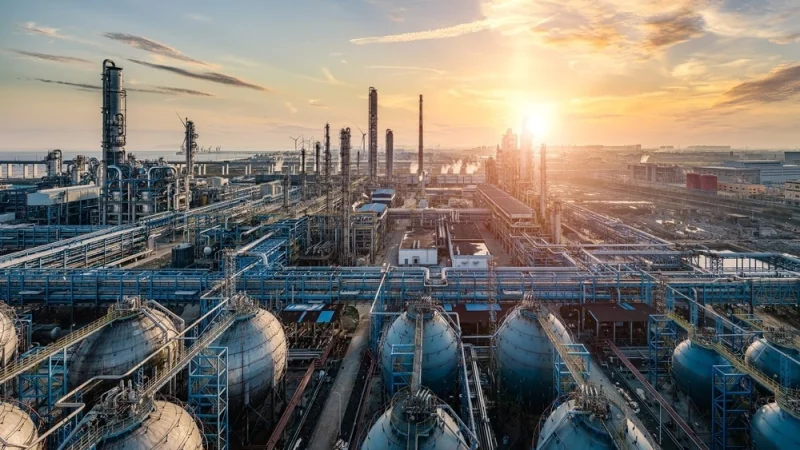
Specialty chemicals producers are turning to AI to make faster formulation decisions as raw material volatility, ingredient restrictions and trade disruptions keep forcing changes across product lines. The shift is not just about keeping ingredients moving. It is about deciding, sooner and with less waste, which formulations can still meet performance, cost and customer commitments when a critical ingredient disappears or becomes too expensive.
That is why resilience is being searched for now. Change has become a fixed operating condition for the sector, and the pressure lands inside the lab as much as it does on the supply chain. Conventional product development workflows make it harder to respond quickly without sacrificing performance or margin, especially when customer demands keep changing at the same time.
In that setting, the companies best able to navigate disruption are using AI to narrow the field, understand trade-offs earlier and focus costly testing on the options that look strongest. The practical value is straightforward: if a team can learn from historical data, predict how untested alternatives are likely to behave and rule out weak paths before final validation, it saves time at the point where time is most expensive. When a key ingredient is unavailable, the team does not need a full search of every possibility. It needs a short list of replacements, and a clear view of what each choice does to performance, cost and risk.

That matters because specialty chemicals formulation is tightly constrained. Changing one ingredient can shift multiple target properties at once. A lower-cost substitute may introduce new trade-offs. A material that looks available on paper may still fail once customer performance needs are applied. In that environment, trial and error is too slow and too expensive to carry the load. AI gives product development teams a way to learn from what they already know, then use that knowledge to spot stronger candidates before the most expensive testing begins.
The friction is that resilience is still often treated as a supply chain issue even though the harder problem is often making the right formulation decision fast enough. Producers do not only need visibility into supply. They need to know which raw materials cannot be replaced easily, which can be swapped with less disruption, and how a shortage or price shock changes the answer. That distinction also affects stock levels, sourcing risk and contingency planning, because not all ingredients carry the same weight in the final product.
AI is also useful when the problem is not scarcity but cost. If a key ingredient becomes significantly more expensive, researchers need to know how a formulation recommendation shifts and whether a lower-cost option can preserve the properties that matter most. That is where resilience becomes a product development capability rather than a logistics one. The article's broader point is that the sector's response to disruption now runs through formulation choices, not just supply visibility, and the teams that can make those choices fastest are likely to be the ones that stay competitive as conditions keep moving. Entergy launches $13.5 million resilience project in St. Bernard Parish
