


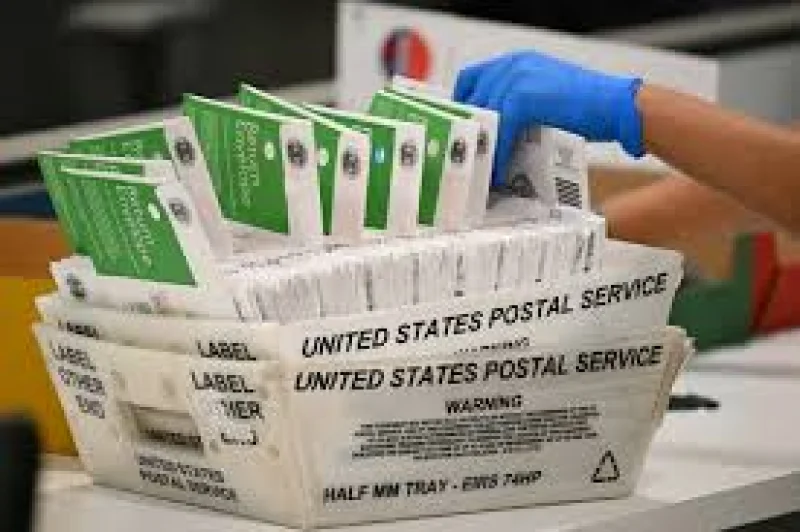
U.S. Postmaster General David Steiner defended a Postal Service plan on June 24 that would require states to hand over lists of voters who received mailed ballots, setting up a fight over whether the agency should be policing federal election mail at all. He told the U.S. Senate Homeland Security and Governmental Affairs Committee that USPS would not deliver ballots in states where officials refuse to comply.
The proposal is drawing attention because it would go beyond routine mail handling. States would have to provide USPS the names tied to mail-in ballots for federal elections, along with the unique barcodes on the outbound and return ballot envelopes. Steiner argued the system would be more efficient and would simply mirror what many states already do, saying USPS is making sure “we match the ballots that a state believes they're sending out to what actually gets sent out.”
That explanation did little to calm the political blowback. Senator Gary Peters said the USPS proposed mail ballot rule would coerce states into turning over absentee voter rolls or risk losing mail voting access. All 47 Democratic senators sent a letter the same day urging the Postal Service to drop the plan, calling it an unconstitutional and illegal attempt to turn USPS into an election administration agency controlled by the White House and President Trump.

The friction is not just about paperwork. The proposal says the barcode requirement would help determine adherence to federal law and facilitate law enforcement efforts, which means the Postal Service would be pulled deeper into disputes over how ballots are tracked and counted. Democrats argued that is exactly the problem: a mail carrier should not be deciding whether a state gets its ballots delivered, especially when the stakes involve voting access itself.
Elissa Slotkin put the clash in personal terms, telling Steiner, “You are being used (by President Trump),” and adding that he does not believe elections he loses are valid. Her comments underscored how quickly the issue has moved from an internal postal question to a test of how far the administration can push state election systems through the Postal Service.
The rule stems from Trump’s March executive order aimed at severely restricting mail-in voting, part of a broader push he has backed with repeated claims that mail voting is prone to fraud without providing evidence. Last week, a U.S. judge said Democratic-led states and voting rights groups could proceed with lawsuits challenging that order, keeping the fight alive even as the Postal Service advances its own plan. The order also directs the Homeland Security Department to compile and send states a list of confirmed U.S. citizens eligible to vote in each state.
What happens next now turns on whether USPS finalizes the rule and whether states decide the risks are worth taking. The Postal Service has already said noncompliant states could see ballots withheld, but the open question is whether that threat survives legal review or becomes another point of conflict in a larger fight over who controls mail voting.
