


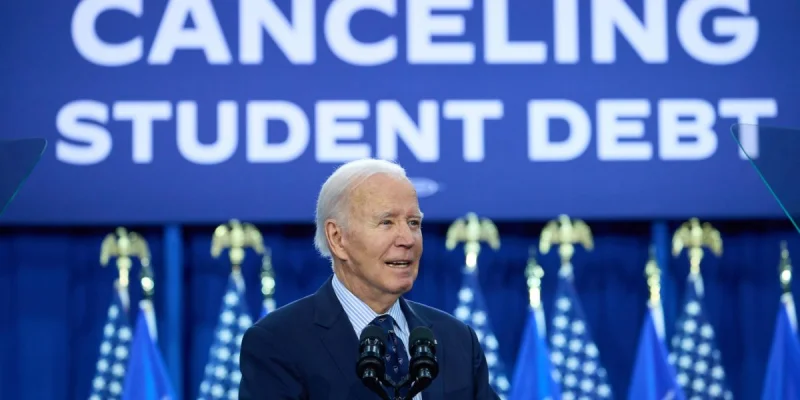
Borrowers who believed President Joe Biden’s repeated student debt relief promises were 7.5 percentage points more likely to be 90 days past due on their loans by May 2025, a new study found. The same borrowers had already pulled back on monthly payments and spent more while the pause was still in place.
The finding lands now because it puts a number on the cost of believing Washington. Researchers at the National Bureau of Economic Research, including Constantine Yannelis, Dmitri Koustas and Michael Weber, matched survey responses on borrower beliefs with credit bureau records and consumption data from 2022 through mid-2025. Their paper shows that borrowers who expected forgiveness cut their monthly student loan payments by $40 and increased non-durable spending by $100 a month.
That matters because the relief promise was not a one-off mistake in the eyes of borrowers. Biden announced in August 2022 that the federal student loan payment pause would be extended one final time, while also promising $10,000 in relief for most borrowers and $20,000 for Pell Grant recipients. The Supreme Court blocked that debt relief plan in June 2023, but the payment pause was extended again and again anyway before monthly bills returned in October 2023, after seven extensions in all.

The gap between what borrowers heard and what later happened is where the damage took hold. Yannelis said there are very real costs when politicians flip-flop, because consumers can make financial plans based on beliefs that are not actually true. In practical terms, borrowers who thought forgiveness was coming stopped making payments, took on other spending commitments and were unprepared when the bill finally came due. The researchers found that once payments resumed, they were suddenly hit with a major financial shock.
The study does not break out exactly how much of the 7.5 percentage point delinquency increase came from the pause itself and how much came from the expectations built around forgiveness. But the mechanism is clear: people who were optimistic about the future reduced their loan payments first, then spent more, and only later faced a repayment bill they had not budgeted for. Yannelis compared it to telling children they could stay up another half hour; they start acting as if the night has been extended, until the rule changes back.
What the numbers show is that the problem was not only policy reversal, but the delay in adjusting to it. By May 2025, the borrowers who had most strongly believed the promise were still more likely to be behind, a sign that the cost of those expectations outlasted the pause itself. The unanswered question is not whether the behavior changed — it did — but how many more households are still carrying the financial hit from planning around a promise that never arrived.
