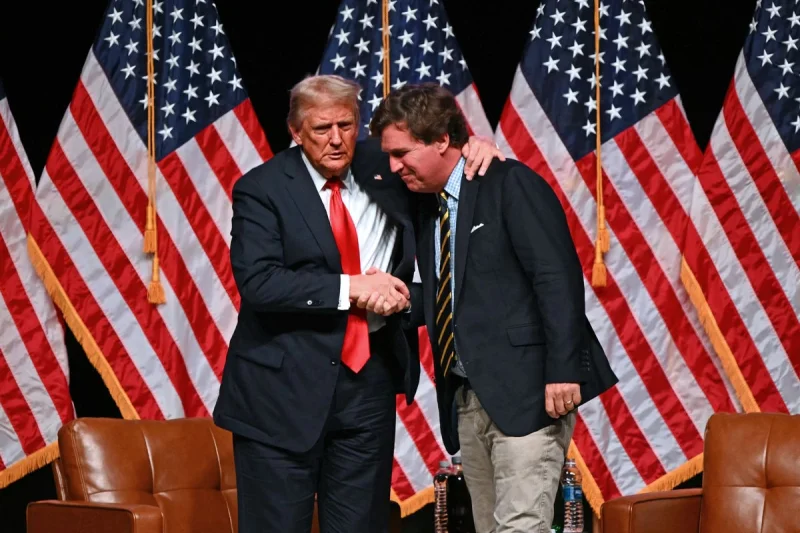
Tucker Carlson said on June 18 that he will no longer support the Republican Party, ending a political allegiance he said lasted his entire life and 35 years of public defense. He told listeners on the Can’t Be Censored podcast that there was “no chance” he would back the GOP again and made the break plain: “I’m out.”
The timing matters because Carlson is still one of the most recognizable conservative voices in the country, with a large audience on Tucker on X and the Tucker Carlson Network. His rejection lands while Republicans are already fighting over Iran and President Donald Trump’s approach to it, giving his words a reach that goes beyond a single podcast appearance.
Carlson did not frame the split as a move toward the other side. Instead, he said the Republican Party had “betrayed” Americans by putting the interests of a foreign government ahead of its own citizens. He accused party leaders of backing President Donald Trump’s Iran war under pressure from Israeli Prime Minister Benjamin Netanyahu and said that conflict was the final proof that Washington had abandoned the people it was supposed to serve.

He put the point bluntly: “How could I or any American voter support a political party that’s not loyal to the United States.” That line leaves the question less about Carlson’s ideology than about whether he still sees a home in either party. For now, he does not sound like a man heading to the Democrats. He sounds like someone walking away from the GOP entirely.
The break also opens a test of whether Carlson’s audience follows him. He said that if he is abandoning the GOP, “a lot of other people are out” as well, and Marjorie Taylor Greene quickly echoed the sentiment on X, saying she was “not the only one” done with a party many conservatives believe has “betrayed its voters and country.” Greene called it the “America LAST Republican Party,” a sign that Carlson’s comments are feeding a wider revolt inside the right rather than standing alone.
The unresolved issue is not whether Carlson has broken with the Republican Party. He has. The real question is whether a figure who spent his whole political life voting Republican can pull even a slice of his audience with him, or whether this becomes another loud rupture that changes the conversation more than the vote count.