


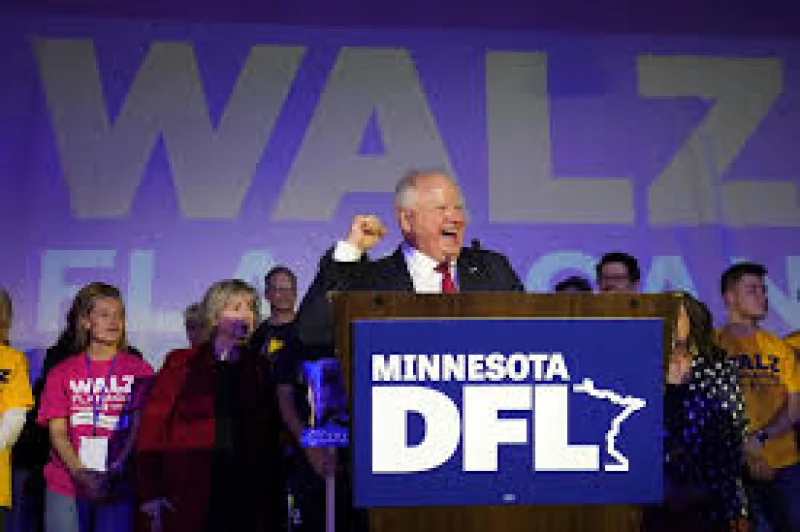
A federal judge on Monday blocked the US Department of Justice from using subpoenas against Tim Walz and other Minnesota officials, ending a Trump administration push tied to immigration enforcement in Minnesota. Chief Judge Patrick J Schiltz said the subpoenas were not a lawful search for evidence, but an attempt to pressure state and local leaders.
The ruling landed in public on Monday when the US district court for Minnesota unsealed Schiltz’s order, and Keith Ellison posted it. Walz called it “a victory for the rule of law and our democracy.” For Minnesota, the decision matters because it stops federal demands that had reached the state’s top elected officials in the middle of a fight over ICE raids earlier this year.
The subpoenas went out in January to Walz, Ellison, Jacob Frey and other local officials. The Justice Department said it was investigating whether they obstructed federal immigration enforcement. Schiltz rejected that framing and said the real aim was to coerce Minnesota officials into helping the federal government enforce civil immigration law and to harass and retaliate against them for not doing so.

He wrote that using an investigation to harass political opponents or force them into official action is a “blatantly unlawful and unethical” use of the grand-jury process. He also said the subpoenas fit a broader pattern of threatening and punishing states and localities that have adopted sanctuary policies.
The friction in the case is plain. The Justice Department said it was pursuing possible obstruction; the court said the subpoenas were designed to retaliate against officials whose governments largely did not support the enforcement surge. That surge also carried a deadly cost, with federal agents killing two US citizens, Renee Good and Alex Pretti, in the streets during the operation.
What happens next is narrower than the political fight that produced the subpoenas. The order has now stopped this particular effort, and the unresolved question is whether the federal government can show any lawful basis for going after Minnesota officials over the raids without turning the grand-jury process into a tool of pressure.
