


Local election officials are increasingly refusing to share voter data or other security information with the federal government, a quiet but consequential break that has widened ahead of the 2024 election. In county offices across the political spectrum, the message is the same: not now, and not with this administration.
Matt Crane said he is actively discouraging counties from doing work with the federal government right now because he does not trust how the administration is using that data or whether it will keep it confidential. He said, “And so I can’t in good conscience advocate that any of my counties do any work with them right now.”
The search around the U.S. Department of Homeland Security is happening now because the administration has taken unprecedented steps to investigate local election administration, including going to court in an effort to get private voter registration data and trying to access voting machines and ballots. Officials see that as more than routine oversight. They see it as a test of whether the federal government wants to help secure elections or use the information to challenge results it does not like.

Crane said Heather Honey is the current DHS point person for elections, but he said her history makes cooperation hard. “They’ve brought the fox into the henhouse,” he said. That suspicion is not limited to one side of the political aisle. Numerous local election officials have told NPR they are holding back voter data or other security information because they fear it could be turned against them.
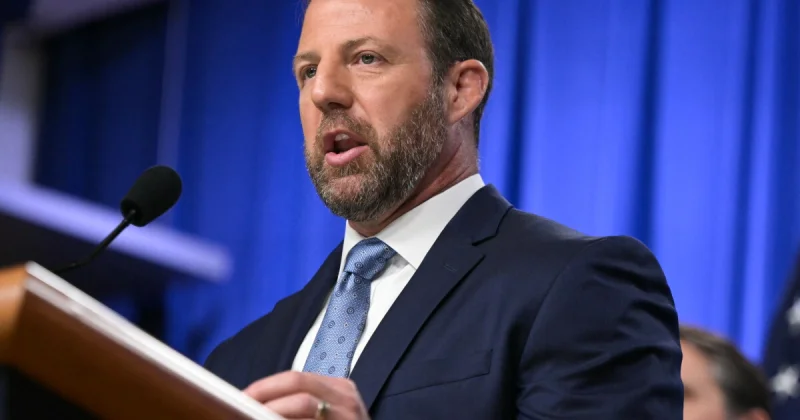
The caution has deep roots in the recent politics of election distrust. Gary Berntsen said in a fall interview with Lara Logan that there are “14 different technical ways” to steal an election, and allies of his say Markwayne Mullin helped arrange a Mar-a-Lago meeting so he could brief Donald Trump’s team on conspiracy theories about Venezuela. Mullin also wrote online on Jan. 2, 2021, that because of the fraud and uncertainty around the 2020 election there was no way he could vote to certify the Electoral College, then joined 147 congressional Republicans in voting not to certify the results after the U.S. Capitol was overrun four days later.
That history has turned a data-sharing fight into a trust test. Trump has spoken about wanting to take over elections in America, and local officials now face a hard choice: cooperate with a federal government that says it is focused on security, or withhold information they believe could be used to undermine the very elections they are meant to protect. For now, many are choosing to keep the files to themselves.
