


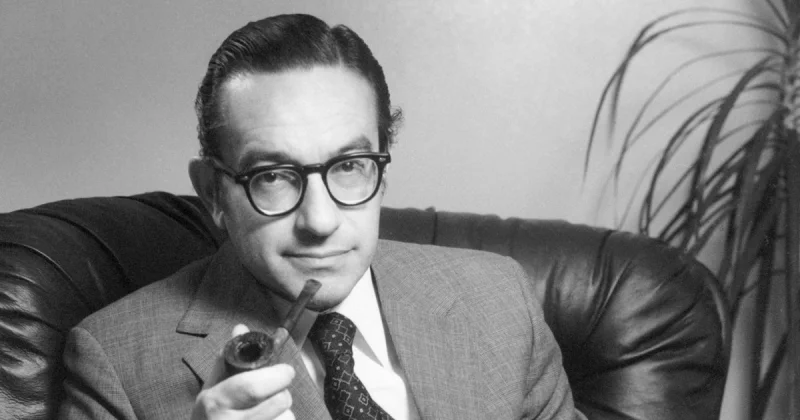
Alan Greenspan, the longtime chairman of the Federal Reserve, died Monday at age 100 from complications of Parkinson’s disease. Andrea Mitchell, his wife, said he died at their home and that he had shaped her life from their first date in 1984.
Mitchell called him “a giant of a man” who helped shape the U.S. economy for decades under presidents of both parties. She said he would be remembered for “his brilliance and his kindness,” a private portrait of a public figure whose influence reached far beyond the central bank.
Greenspan spent five terms at the Federal Reserve and led it through one of the longest economic expansions in U.S. history, from 1991 to 2001. That stretch made him one of the most influential people in U.S. monetary policy, with decisions that touched borrowing, inflation and growth across a generation.

His path to that role started in Washington Heights in New York City, where he was born on March 6, 1926. He studied at the Juilliard School, played jazz saxophone and clarinet in a band in his early years, earned degrees from New York University in 1948 and 1950, and began doctoral work at Columbia University under Arthur F. Burns before leaving in 1953 for Townsend-Greenspan Co., Inc.
He later moved into national politics as an adviser on Richard Nixon’s 1968 presidential campaign and then joined Gerald Ford’s administration as chairman of the Council of Economic Advisers in 1974, serving until 1977. His policies, together with tighter monetary policy from the Paul Volcker-led Federal Reserve, helped reduce inflation from 11% to 6.5%, adding to the reputation that made him a fixture in economic debate for decades.
But the record never stayed clean. Critics faulted Greenspan for decisions they say helped create the conditions for the global financial crisis of 2007-08, a charge that shadowed the late years of his public image and kept his legacy split between admiration and blame. Mitchell said he was always honest in acknowledging his mistakes, and that may be the sharpest way to understand the man who spent a lifetime defending judgment under pressure.
His death closes the book on a central architect of modern American economic policy, but not on the argument over what his legacy means. For readers trying to weigh that record, the unanswered question is not what Greenspan mattered for — it is how much of the world he helped build should still be counted as his lasting work.
