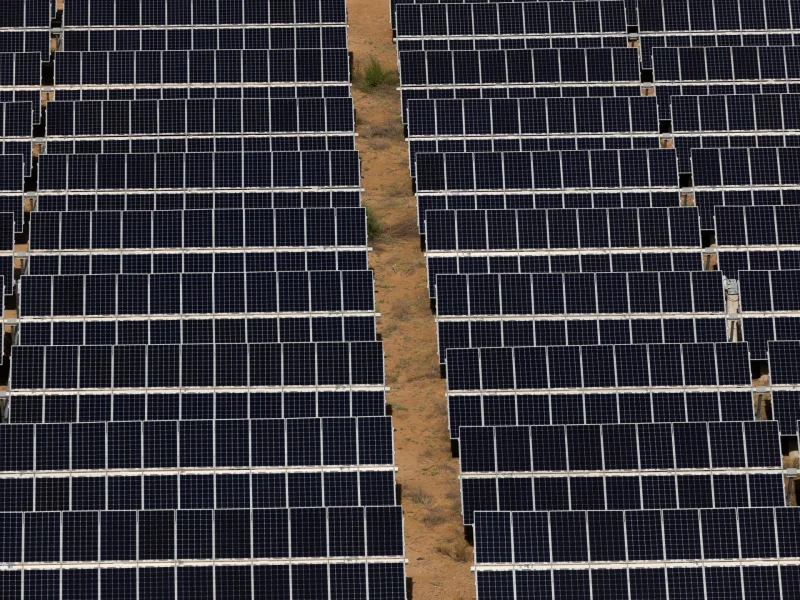
Tunisia sent five concession contracts for electricity production from renewables to the Tunisian parliament on January 29, putting a 598-megawatt solar plan into the political arena just as the country’s energy deficit keeps widening. The projects, spread across Khobna and Mezzouna in Sidi Bouzid, El Ksour and Sagdoud in Gafsa, and Menzel Habib in Gabes, would require about $560m in total investment.
The filing matters because Tunisia’s energy deficit now stands at roughly $3.8bn, equal to nearly 51 percent of the country’s total trade deficit, and it has grown every year since 2000. In that setting, renewable concessions are being sold as part of the answer. But they also move control of electricity generation away from STEG and toward foreign multinationals, turning a public utility problem into a private deal.
Whether the Tunisian parliament approved the five contracts after they were submitted on January 29 is still not stated, and that is the key thing readers are left waiting on. If the package moves forward, it would do so with a structure that includes tax exemptions and stabilisation clauses, which the Tunisian Economic Observatory says would leave little room for technology transfer, local integration or jobs. The same model would also raise the question of who keeps the value from carbon credits generated on Tunisian territory.
That issue has already split the debate inside the labor side of the energy sector. On April 21, the Electricity and Gas Federation warned that the concessions would reduce STEG to a mere grid operator and hand electricity production to foreign companies. Last year, the federation had already organized a strike over the transfer of carbon credits to private developers, a sign that the resistance is not new and is unlikely to fade if the contracts advance.
For Tunisia, the choice is no longer between renewable energy and delay. It is between a transition built around public control and one that uses the green label to lock in foreign ownership, public cost and private gain.