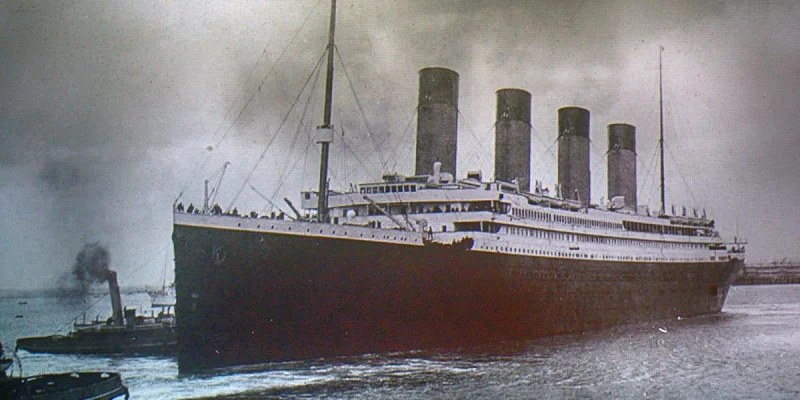
Rising interest rates are turning the cost of government borrowing into a far heavier drag, and the United States is already paying for it. The annual interest bill on US debt has jumped from $508 billion in mid-2020 to $1,219 billion in the first quarter of 2026, as the yield on 10-year US Treasuries climbed from 0.65 percent to around 4.5 percent.
That is why the search around Titanic is showing up now: the phrase is being used as a warning that large debt burdens can hit an iceberg when refinancing costs rise faster than expected. With total US debt around $39 trillion today, and an average refinancing rate still at 3.1 percent, the gap between old borrowing costs and new ones is widening in real time.
The arithmetic is blunt. If refinancing rates stayed permanently at 4.5 percent, Americans would be paying nearly $1.8 trillion a year in interest. That would lift the burden to 5.8 percent of GDP, up from 3.8 percent now. The increase is not a one-off shock; it is the result of a steady climb in rates since 2020, after years in which central banks helped push borrowing costs lower under fiat money regimes. As governments roll over maturing debt rather than pay it down on a net basis, each refinancing cycle locks in a higher bill.

That is also where the friction sits. Rates have been rising for years, yet the move is described as something more than a normal return to historically more normal levels. The argument is that the increase has taken on momentum of its own, because once a government is carrying a large stock of debt, even small changes in rates feed directly into annual interest costs. The Titanic analogy works because the damage does not come from the first turn alone; it comes from the size of the vessel and the force of the impact.
The pressure is not limited to the United States. The situation is said to look similar or worse in Japan, France, Italy, the United Kingdom and Germany, where heavy debt loads also leave governments exposed when older bonds mature and new ones must be issued at higher rates. The warning is simple: once interest costs rise above the pace of economic growth, budgets tighten, refinancing becomes more expensive and the burden compounds.
That leaves the next question less about the metaphor than the math. If rates hold near current levels, the refinancing bill keeps rising with each new issue of debt, and the gap between what governments borrowed in the era of cheap money and what they now have to pay will only widen.
For readers looking for the broader symbol, the Titanic name has long carried that sense of disaster outrunning confidence, from the ship’s sinking in the North Atlantic after striking an iceberg on April 14, 1912 to later cultural references that still sell, including a Leonardo Dicaprio Titanic script that once fetched £620 at auction.