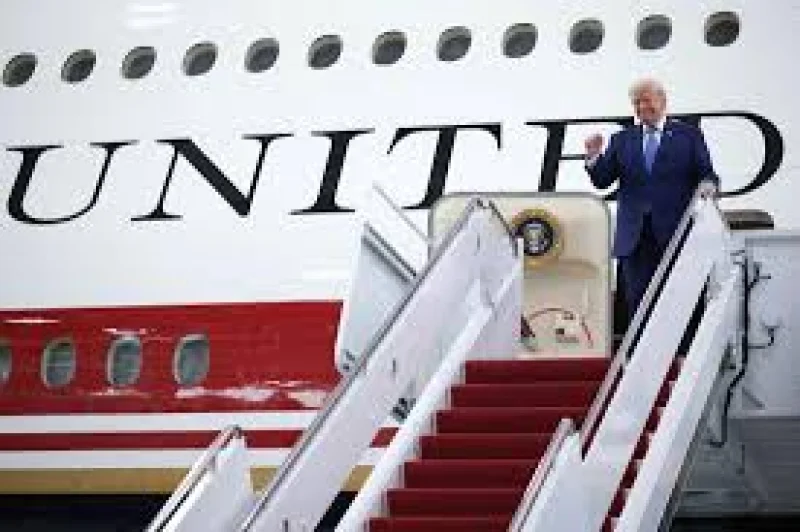
Donald Trump unveiled a new temporary Air Force One on Friday at a hangar at Joint Base Andrews in Maryland, putting the Qatar-gifted Boeing 747 on display as the presidential fleet waits for its next planes. The jet has been designated VC-25B and VC-25B Bridge.
The aircraft is meant to carry the president until two long-delayed Boeing planes arrive in 2027 and 2028. That makes the timing important now: the White House wants a bridge aircraft in service for years, not months, while the current presidential 747s keep aging past the 30 years they have already spent in service.
The numbers explain why the rollout drew attention. The jet was reported to be worth $400m, while converting the Qatari 747 has been put at $1bn. The two purpose-built presidential aircraft were first expected to cost $3.7bn, but that figure has climbed to $5bn. Trump said it would be “stupid” to turn down the offer, and Sean Parnell said “the secretary of defense has accepted a Boeing 747 from Qatar in accordance with all federal rules and regulations.”

That bargain, though, came with a faster path than the one the Air Force would normally take. The service fast-tracked the retrofitting and skipped some planned modifications for the next-generation presidential jet so the interim version could be delivered sooner. Troy Meink said the safety and security of the commander in chief is his highest priority, and later said the service “meticulously evaluated every requirement to accelerate delivery while maintaining the high standards expected of the presidential mission.” The question raised by the shortcut is simple: which modifications were left out, and how much risk, if any, was accepted to get the aircraft ready now.
Trump has framed the plane as a symbol of national prestige, calling it “the world’s most luxurious plane” and saying it “will lead the biggest flyover in American history” during the planned formation flight over Washington DC on 4 July for the 250th anniversary. But the aircraft is also arriving against a backdrop of wear in the old fleet. One of the aging 747s was forced back to Washington on a trip to Davos, Switzerland, earlier this year after Karoline Leavitt said the crew found a “minor electrical issue” and turned around.
The new jet’s interior, meanwhile, underlined the contrast between ceremony and utility. A tour showed decor that included a framed print of a duck swimming in the Lincoln Memorial reflecting pool. However polished the cabin looks, the aircraft remains a temporary bridge: if the delayed Boeing replacements slip again, this stopgap will matter longer than its unveiling suggests.