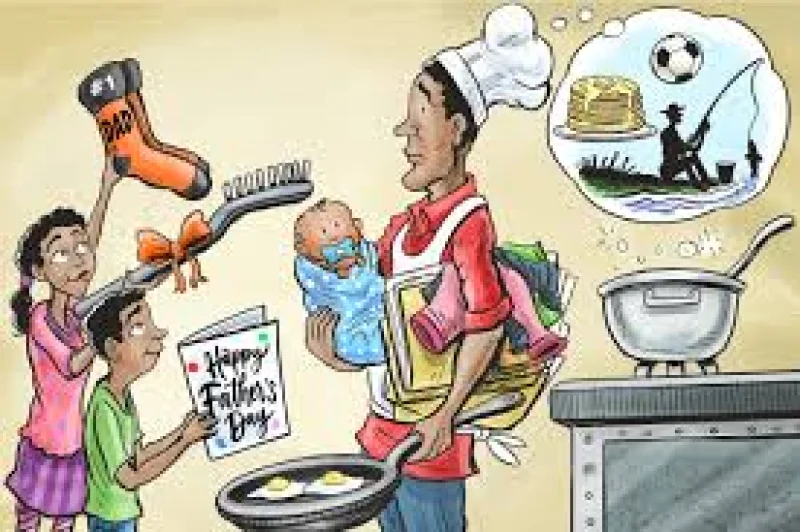
On June 21, fathers around the world will likely open another tie, mug, golf club, or grill kit. The case being made this Father’s Day is that the better present may not come from a store at all. It may be faith.
That argument lands now because Father’s Day is one of the few holidays built entirely around what kind of man a family wants to honor. If the usual Father’s Day gift ideas start to feel thin, the alternative being put forward is blunt: give fathers something that could shape their lives, not just their closets. Studies have linked active religion with greater happiness, more civic engagement and better physical health, and religion is often described as a buffer against loneliness and social isolation.
The appeal is not only spiritual. Men carry a disproportionate share of deaths of despair, including suicide, drug overdose and alcoholic liver disease. That is part of why the faith question is being raised in the first place. Arthur Brooks has said men’s friendships are often built around shared interests such as sports, not shared inner lives, which leaves a gap that religion can fill in ways a gift card cannot.

There is also a family argument behind it. One study shows that a dad’s presence at church is the single biggest factor in determining whether his children will attend church as adults. In that sense, the holiday is not just about what a child gives a father. It is about what a father passes on.
That is where the historical friction comes in. Men have not always been distant from religion. In the ancient and medieval worlds, they took the lead in religious institutions and theological debates, and figures such as Constantine, Augustine and Anthony of the Desert are still associated with that tradition in Western history. Even now, the Quiet Revival in Christian faith has made headlines over the past year, and it is being led by young men age 18 to 24. Gallup found that, for the first time in 25 years, more young men than women are saying that religion is very important to them.
The contradiction is clear enough. Men have often been central to religious life, yet many have drifted from it. A trailer for The End of Oak Street captures that gap in one exchange: a father says, “God’s not gonna let us die here,” and a mother shoots back, “Greg, you only go to church at Christmas, and now you’re telling the kids God’s looking out for us?” The line lands because it sounds less like theology than a family argument over whether belief is real or merely borrowed for emergencies.
That leaves the practical question. If the best Father’s Day gift ideas are supposed to mean something, what exactly should faith look like as a present? The answer in the piece is more invitation than object: church, belief, and a life that gives fathers and their children something sturdier than another seasonal item. The next move belongs to families deciding whether this June 21 will be another round of ties and mugs, or the start of something that lasts longer than the wrapping paper.