


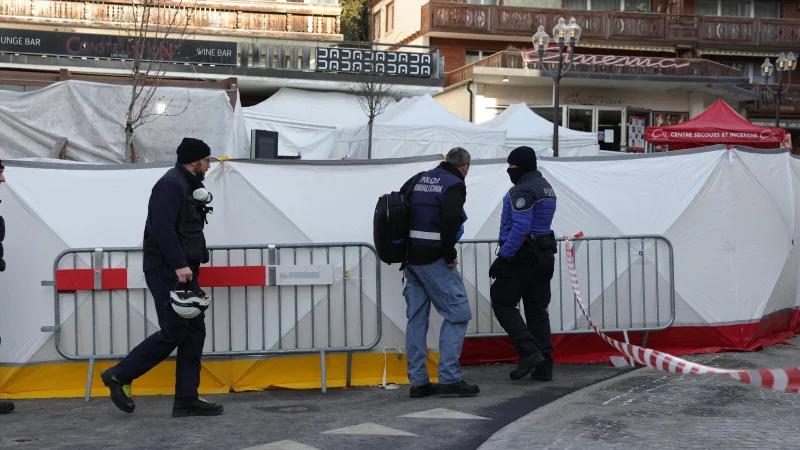
Nearly six months after the fire at the Constellation in Crans-Montana killed 41 people and injured 151, Camille says her life never picked up again. She is still living with the aftereffects of a broken rib and second-degree burns on her hand, and says she has not regained full mobility.
She was there on New Year’s Eve 2026 to see her friend Cyane. Camille says Jessica Moretti asked a waitress working upstairs to help serve champagne bottles, and within seconds the ceiling’s acoustic foam caught fire. In the panic that followed, she fell and was trampled by the crowd. Her companion pulled her out of the bar and then went back in to try to save Cyane.

For Camille, the damage did not end that night. She says her life stopped on 1 January and that she still cannot fully process what happened. Living next to Cyane’s former home keeps the loss close, and she says she would like to move but cannot afford to do so. She recently lost her job, adding a financial blow to injuries and trauma that still shape her days.
That is where the aid fund becomes another barrier. Camille says she cannot qualify because she did not spend the night in hospital, even though the fund is meant to help victims pay for treatment and rebuild their lives. Her lawyer says there is no room in the system for psychological trauma, which can last longer than physical harm, or for the economic fallout that has left some survivors in a much more fragile position after the fire.
Several compensation cases are still being studied, but the review is not yet finished. That leaves Camille in the same place she was in after the flames were out: injured, grieving and waiting for a system built around hospital stays to catch up with the reality of what that night did to the people who got out alive.
