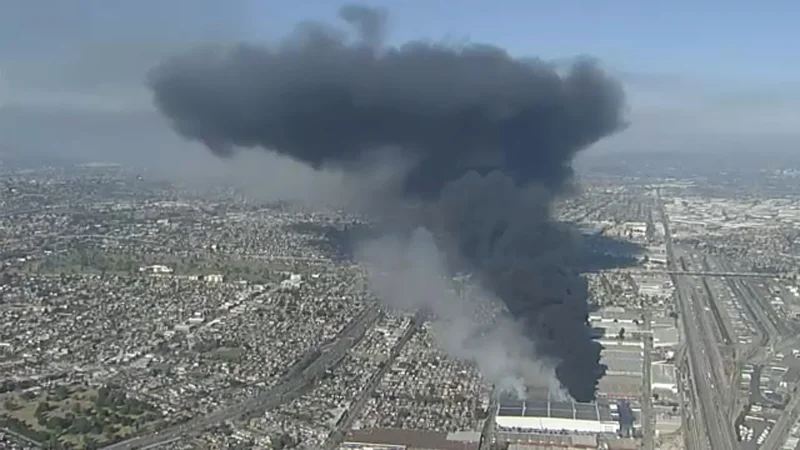
Los Angeles Fire Department crews were still fighting a commercial structure fire in Boyle Heights on June 19, after a flare-up inside the building sent smoke back into the air and kept suppression work going late in the day.
The fire started at 1400 S Los Palos Street on June 17, when crews arrived at about 2:35 PM to find flames visible from the roof of a large single-story commercial building measuring 1,000 feet by 500 feet. Within about 15 minutes, a suspected ammonia leak pushed Incident Command into a defensive posture, and the building plus nearby businesses were evacuated early in the incident.
That made the smoke advisory on June 19 especially important for people in LA City Genasys zones 1239, 1241, 1279A, 1279B and 1281. The shelter-in-place order for zone 1279-A in Boyle Heights was lifted at 11:25 AM that day, but the broader advisory remained in place even as crews kept working the scene. For residents and workers nearby, that meant one order was easing while the fire itself was still active.

By June 18, personnel had already spent several hours ventilating the structure, and at 2:39 PM LAFD said it would keep pushing hazardous smoke out of 1400 S Los Palos St. A pocket of fire in a freezer container prompted more fire companies to head in, and residents in zone 1279 EAST OF LORENA ST were ordered to shelter in place. LAFD helicopters later made water drops to knock down the bulk of the flames.
Then at 5:05 PM on June 19, an expected change in wind conditions triggered another flare-up inside the structure. By 6:40 PM, firefighters were still attacking the fire from the exterior on the roof and inside the building, with no immediate threat to the public. Changing weather and the ongoing suppression work also meant smoke could still be seen from surrounding communities.
The fire was largely under control within six hours, but not fully finished in the way people usually mean it. The size of the building and the conditions inside limited ground access, which is why crews kept ventilating and using helicopters instead of simply waiting for the last hot spots to burn out. Air and water quality monitoring were expected to continue as the operation moved on.