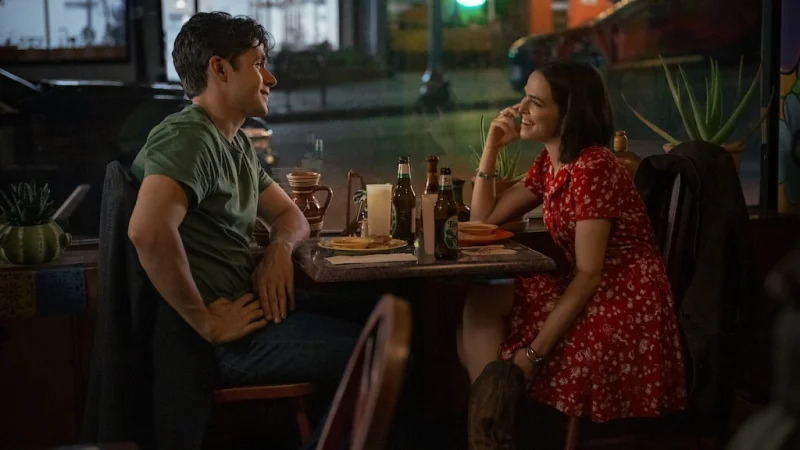
Netflix’s new romcom Voicemails for Isabelle has arrived with a premise that is meant to feel off-kilter from the start: Zoey Deutch plays Jill, a grieving sister who keeps leaving voicemails on her dead sibling’s old phone, only to discover the number belongs to a stranger. That stranger is Wes, played by Nick Robinson, and he does not simply hear the messages by accident. He listens, tracks Jill down and inserts himself into her life.
The film is being discussed now because it has landed as a fresh release and because its setup sits right on the line between romantic comedy and something far more unsettling. The premise is not a tease or a twist. It is the engine. Jill thinks she is speaking into a private space of grief, while Wes is building a relationship from the other end of the line.
’s review of the film places that awkwardness at the center of the story. Robinson’s Wes is not a harmless meet-cute; he is a stranger who uses voicemails meant for a dead sister as a route into Jill’s life, then keeps quiet about how the relationship began even as he wins her heart. Deutch’s Jill carries the emotional weight of the film, because her calls are an act of mourning before they become the basis for a romance she never meant to start.
That is also why the movie’s tone matters more than its plot summary. Leah McKendrick wrote and directed the film, and the review says she had to balance a self-aware sense of how creepy Wes’s behavior is with the demands of a conventional romcom. The result is described as slicker than the usual studio-made streaming title, but also uneasy. McKendrick has called it “a sick reboot of You’ve Got Mail,” which is a useful way to understand the trick the film is trying to pull: make surveillance feel like courtship without losing the audience along the way.
The film was originally written in the 2000s, then dusted off and tweaked for the 2020s, and it was first set to star Hailee Steinfeld back in the 2010s. Those revisions matter because they explain the movie’s odd mix of old-fashioned romance machinery and modern dating language. It includes two Taylor Swift songs, dating buzzwords like gaslit, secure attachment and love bombing, and even a running-in-the-rain climax, as if it is trying to modernize the language around love while keeping the shape of a classic studio romance.
But the film never fully escapes the problem built into its premise. The story wants the audience to accept Wes as a romantic lead while also admitting that his first move is invasive and misleading. That is the friction the review cannot ignore, and it is the reason the movie reads less like a simple love story than a test of how much creepiness a romcom can absorb before it stops feeling like one. The answer, at least here, is that the film leans on charm, but not enough to make the unease disappear.
That leaves the central question in a sharper form than the movie itself may intend: if Wes refuses to tell Jill why he really came into her life, the romance depends on a lie that the film keeps trying to dress up as destiny.