


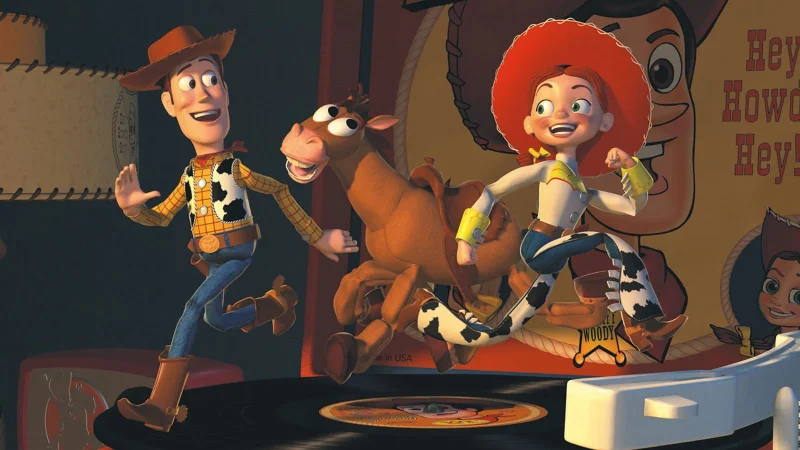
The case against Toy Story 4 starts with a simple claim: Pixar already told the story it set out to tell. The original Toy Story trilogy was a complete artistic triumph, a three-film arc that began in 1995 and reached its emotional finish with Toy Story 3 in 2010.
That is why the franchise still draws readers in today. The first film practically invented computer animation and made Woody and Buzz Lightyear more than studio mascots. It made a 6-year-old Andy the boy who unwraps a new Buzz Lightyear action figure, then turns that arrival into the beginning of a story about change. Woody, a mid-century cowboy doll with a sheriff’s badge and a pullstring, and Buzz Lightyear, with pop-out wings and a red laser gun, had to accept that things change and the world does not revolve around them. That is the engine that keeps the trilogy alive in the mind long after the credits.
The commercial record backed up the idea that this was no ordinary franchise. Each of the first three Toy Story films ranked among the three highest-grossing films worldwide in the year of its release, and Toy Story 3 was the first animated feature to crack $1 billion at the box office. Few series can claim that kind of reach and still be called artistically intact. The original run was a triumph financially, culturally, and artistically, and it appealed to children and adults at the same time.

What makes the first three films feel closed, though, is not just the money. It is the shape of the story. Toy Story 2 became a meditation on loss, finitude, and mortality, with Woody forced to choose between living behind glass in a toy museum and going back to Andy. By Toy Story 3, the point had sharpened: the trilogy captured what it is like to grow up in all of childhood’s ambivalent complexity. Andy is 8 years old in one reference point and 17 in another, and the films track that passage with unusual honesty. Woody’s line about not being able to stop Andy from growing up, and not missing it for the world, is not a throwaway sentiment. It is the conclusion the trilogy earns.
That is also where the friction lies. The franchise continued, but the message of the first three films was already complete. Woody and Buzz Lightyear had learned the lesson that mattered most. Woody’s old cry, “You. Are. A. Toy!!!,” was never just a joke; it was the declaration of a world with rules and limits. By the time the trilogy ends, those limits are the point. Extending the story after that does not deepen the arc so much as risk weakening it.
The strongest argument for stopping at three is that complete stories are rare, especially in franchises that keep finding new reasons to live. Toy Story did not need to become bigger to become greater. It had already done the work: built a world, made it matter, and then let its characters accept the one change no toy can avoid. The unanswered question is no longer whether the trilogy was enough. It is why anyone thought it needed a fourth chapter at all.
