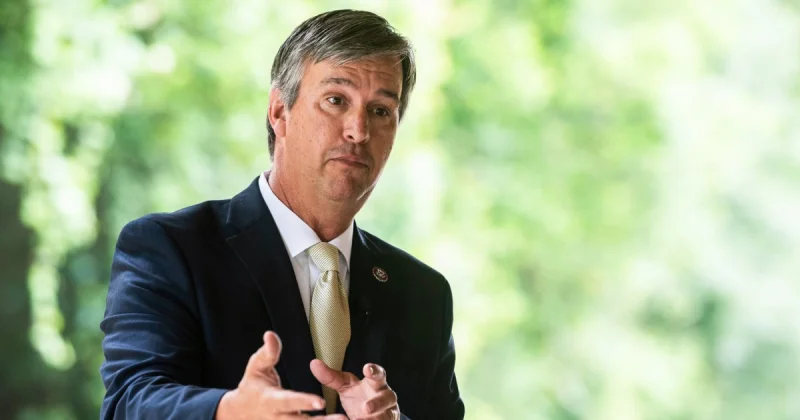
Rep. Barry Moore won the Republican primary runoff in the Alabama Senate race on Tuesday, and NBC News projects him as the GOP nominee for the open Senate seat. He defeated former Navy SEAL Jared Hudson after no candidate cleared 50% in the crowded May 19 primary.
The result locks in the Republican nominee for a seat that opened after Tommy Tuberville launched his run for governor last year. Tuberville later easily won the GOP nomination in that race last month, leaving the Senate contest to be decided between Moore and Hudson.
Moore’s victory also gives him the backing of Donald Trump, who endorsed him, held a tele-rally with him last week and repeated that support on Truth Social on Monday. In his victory speech, Moore said Trump takes his calls, a line aimed at underscoring the direct line he wants to bring to the race if he wins in November.

The campaign was not only about politics. It was also shadowed by a dispute over Moore’s military title after an outside group aligned with Hudson accused him of stolen valor. Moore was listed as a signer on a 2024 letter to Minnesota Gov. Tim Walz that identified him as having served as a staff sergeant, but records shared by his campaign indicated he was discharged with a rank of cadet. His campaign said he was honorably discharged and said he has never called himself a retired Staff Sergeant or even a Staff Sergeant.
Moore first won election to Congress in 2020 and served in the Alabama National Guard and Army Reserve. Hudson, meanwhile, ran unsuccessfully for Jefferson County sheriff in 2022 and is the CEO of groups that work with law enforcement to combat child trafficking and focus on firearms instruction. His closing pitch tried to tie him to Trump as well, saying he would deploy to the Senate to defend the president with the same ethos he said he learned in SEAL training.
With the runoff settled, the Republican field for the Alabama Senate seat is set and Moore moves into the fall as the clear favorite in a state that has leaned heavily GOP. The unresolved question is less about the nomination now than whether the service dispute and the crowded primary fight leave any mark when voters return for the general election.