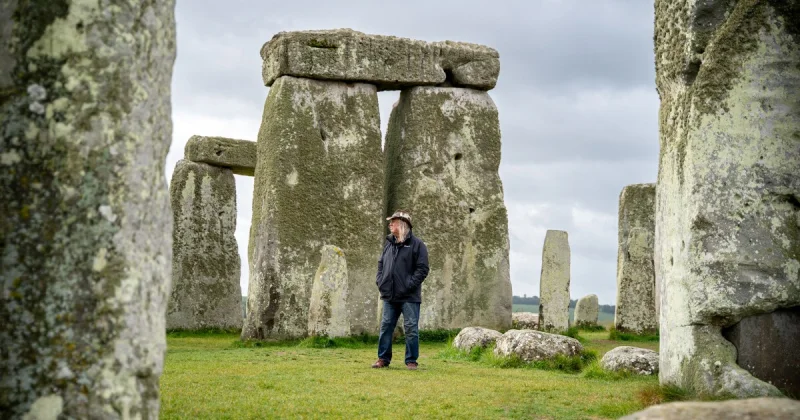
Archaeologists have uncovered two large pits in Bulford, 3 miles east of Stonehenge, that they believe once held towering wooden posts from a much older ceremonial monument. The find points to a solstice-aligned structure in southern England that may have stood around 3000 B.C., about 500 years before Stonehenge’s later stone circle took shape.
The timing matters because thousands of people are expected to gather at Stonehenge on Sunday for this year’s U.K. summer solstice, when the monument’s own alignment with the rising sun has long drawn attention. The Bulford discovery suggests that people in the area were marking the sky in a similar way centuries earlier, before the famous stones were raised.
Phil Harding, who worked on the excavation, said he was “ecstatic, but cautious,” and said the team had to be “absolutely certain” the interpretation was right. He added that knowledge of this ancient feat of astronomy had until now rested on Stonehenge and other monuments of a similar period, but that Bulford appears to be 500 years earlier than the famous stones people know so well.

Researchers say the case for wooden posts rests on the shape and scale of the two pits, their alignment to the summer solstice sunrise and the winter solstice sunset, and the wider mix of finds recovered from the site. Alongside pottery, flint tools and animal bones, the excavation turned up enough material for archaeologists to spend years analyzing the evidence after work at the site ran from 2015 to 2017.
That long analysis matters because the timber itself is gone. The wood has rotted away, leaving archaeologists to read the site through the empty pits and the objects buried with them. Jennifer Wexler said the ancient people had a sophisticated knowledge of the sky and the movements of the moon and sun, but also held religious ideas about it, with celebrations linked to the solstices likely carrying deep symbolic meaning.
Stonehenge remains one of Britain’s best-known landmarks and a major tourist draw, and UNESCO designated it a World Heritage Site in 1986, calling it the most architecturally sophisticated prehistoric stone circle in the world. But the Bulford discovery pushes the story of that landscape deeper into the past, showing that the impulse to build around the solstices did not begin with stone. What remains open is whether anything more can still be learned from the pits themselves, now that the posts they may have held are long gone.