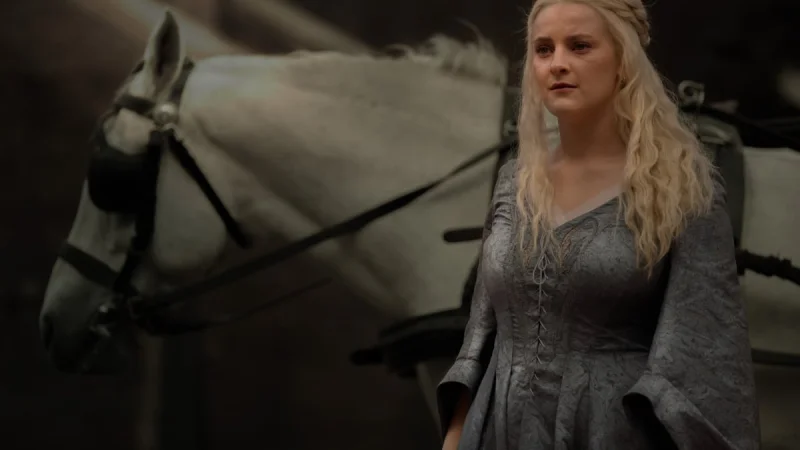
House of the Dragon ended season three by giving Rhaenyra Targaryen a public prophecy reveal that does not exist in Fire and Blood, and Ryan Condal says the change was meant to jolt her story into a new phase before the show’s final season.
That matters now because Condal has confirmed season four will be the last chapter of House of the Dragon, which turns the finale into more than a surprise beat. It becomes the bridge to the endgame, and the showrunner is already drawing a line between what the book gives him and what the television version needs to do in the open. The speech sends Rhaenyra’s private burden into public view, which is a very different kind of power move when the story is heading into its last stretch.
Condal said he and the writing staff wanted a real seismic change and a sea change in Rhaenyra’s relationship with her people. He also said the book never mentions the Ice and Fire prophecy, and it does not mention Rhaenyra making a public declaration, but he embraced the idea anyway because, as he put it, Targaryens say crazy shit all the time. In his view, so much of their existence is self-aggrandizement, and this scene lets the show turn that instinct into a public act instead of a private belief.

The choice also speaks to where the character has been headed. Condal said there has been talk about Rhaenyra becoming very despotic, becoming a tyrant at the end, and becoming very unpopular with the people, and the finale pushes against a simple reading of her as either hidden savior or inevitable villain. By making the prophecy public, the show gives her a claim that is political as much as mystical: she is not only speaking to destiny, she is trying to shape how others see her right now.
Emma D’Arcy, who plays Rhaenyra Targaryen, framed that shift in starker terms, saying power turns out to be incredibly fragile and that the apparent stability of seats of power can turn out to be illusory. D’Arcy also said the scene raises a pressing question about how to manage the human ego in the political sphere, which fits the moment the finale creates: a ruler trying to turn belief into authority while knowing authority can crack quickly.
That is where the friction sits. The public prophecy speech is treated as a decisive turn, yet it is also a break from the history the series is built on, and Condal does not pretend otherwise. The move suggests the show is less interested in preserving the book’s silence than in using that silence to create a final-season reset, one that leaves Rhaenyra’s next steps defined by what she has now declared in front of others.
For viewers, the unanswered question is not whether the prophecy exists inside the story. It is how season four will make that public declaration matter when the series closes out its run. If the finale is the reset, the last season has to show whether the speech gives Rhaenyra more leverage, more exposure, or both.