



The Federal Reserve’s latest dot plot turned more hawkish this week, with nine policymakers projecting at least one interest-rate hike before the end of 2026 and six seeing multiple hikes as a possible path. That is a sharp change from March, when the central bank’s outlook still pointed to one rate cut in 2026 and two cuts by the end of 2027.
For anyone watching the Dow Jones Stock Market, the reason that matters is simple: the Fed did not just leave rates unchanged at 3.50% to 3.75% this week, it also signaled that the next move is no longer assumed to be a cut. The projection grid showed nine policymakers expecting higher rates and nine saying rates would be unchanged or lower by the end of 2026, a split that leaves the path ahead less certain than the March forecast.
Kevin Warsh, who did not participate in the dot plot, made clear he would not add his own forecast to the exercise. “I, however, have refrained from offering any projections of my own, consistent with my long-held views,” he said, later adding, “I don’t believe in forward guidance.” He also argued that the Fed gives the world its dots and forecasts and then clings to them too long.
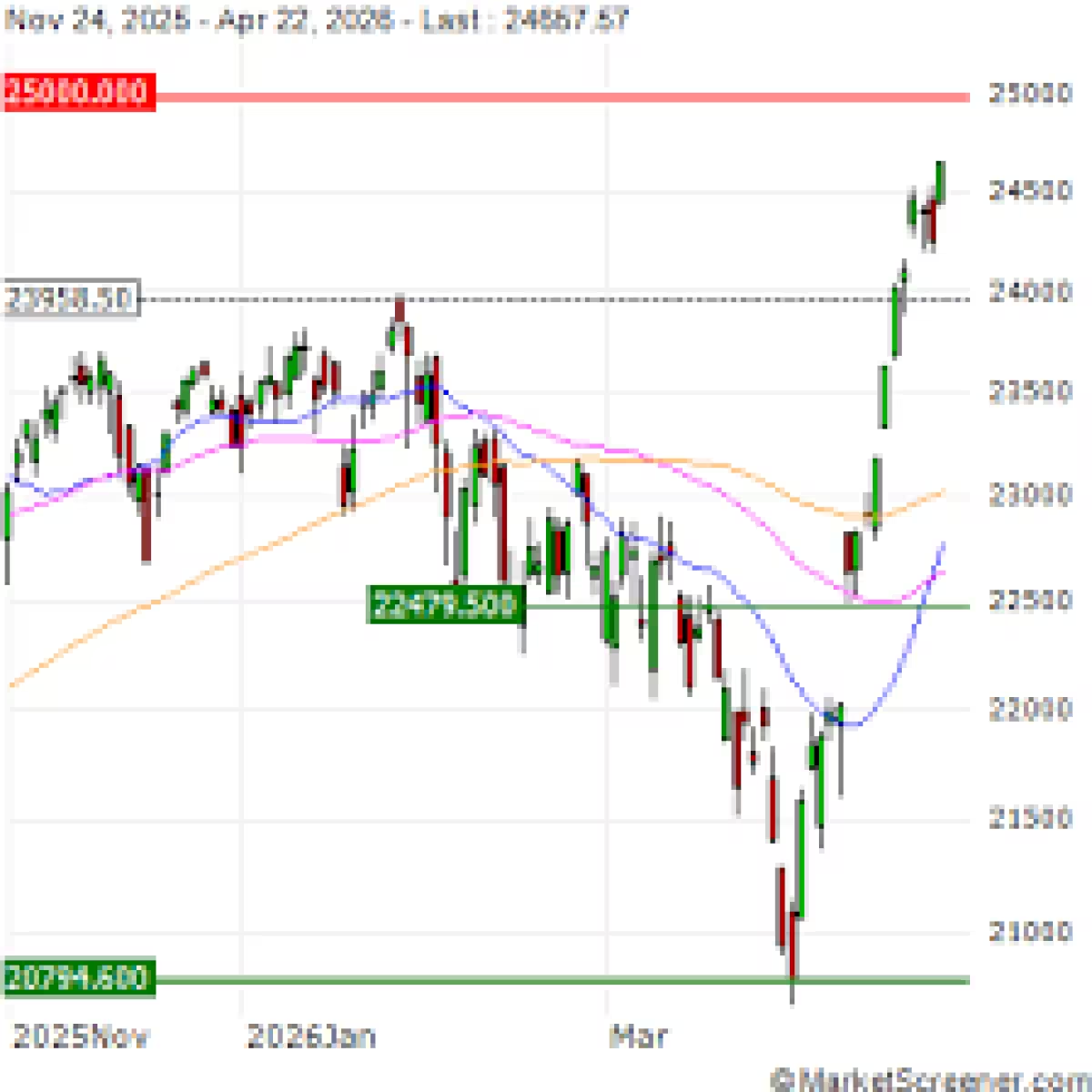
That debate sits at the center of the Fed’s own communications strategy. The dot plot, created in 2012, is a quarterly exercise in forward guidance, and Warsh has signaled he wants to limit it or phase it out. He said a new communications task force will review the Fed’s broader approach, including “communications broadly, press conferences, dots, meetings, and the like.”
There is a catch that makes that idea harder than it sounds. Ending the dot plot would require consensus inside the committee, and the latest projections show no consensus at all on where policy goes next. The other 18 members of the Federal Open Market Committee offered their forecasts anonymously, leaving investors to read a divided signal rather than a single view from the new leadership.
Gregory Daco said the shift may already mark a turning point, saying, “I think this might be the last time we see the dot plot.” If that proves right, the more immediate question is not whether the Fed can talk less, but whether it can replace a tool that still shapes expectations even when its own policymakers cannot agree on the message.
