


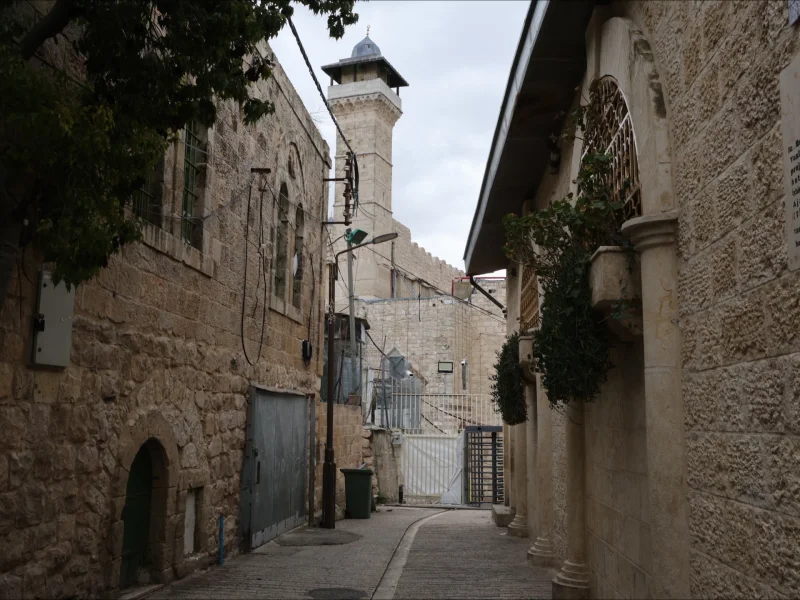
Israel seized planning and construction powers at the Ibrahimi Mosque in the occupied West Bank from Palestinian authorities on Monday night, a move that immediately put one of Hebron’s most sensitive holy sites back at the center of a dispute over who controls the city. The change affects civil authority at the site, not security control, and it landed as Israeli and Palestinian officials offered sharply different readings of what, exactly, had been decided.
Finance Minister Bezalel Smotrich said at an inauguration ceremony for the Doran settlement in the southern Mount Hebron area on Tuesday that “Yesterday we cancelled the Hebron agreements.” His remarks were enough to set off a scramble over the legal meaning of the move, because the 1997 Hebron Agreement — signed by Benjamin Netanyahu and Yasser Arafat — gave Palestinians control over planning and construction across Hebron, including the Jewish Tomb of the Patriarchs and the adjoining Ibrahimi Mosque.
That arrangement also divided Hebron into two sectors. Israel kept security control over H2, while civil powers, including planning and construction, remained with the Palestinian municipality. The latest decision therefore goes to the heart of a long-standing split between military and civil authority in the city, and it does so at a site that was inscribed in 2017 on UNESCO’s World Heritage and World Heritage in Danger lists. For Palestinians, that is why the announcement carried immediate political and symbolic weight well beyond a routine planning step.

Israel’s Foreign Ministry pushed back on Smotrich’s framing, saying the Hebron Agreement was not canceled and that a cabinet decision made months ago covered planning and construction authority in the Jewish settlement and at Jewish heritage sites only. The gap between those two positions is the dispute now: whether the move is a narrow administrative adjustment or an attempt to rewrite the agreement that has governed Hebron since 1997. The answer matters because the ministry’s version would leave the broader framework intact, while Smotrich’s language suggests the opposite.
Palestinian officials rejected the step outright. The Palestinian Authority said it was unlawful, and Mahmoud Abbas’s office said unilateral measures were unacceptable and violated agreements signed by the Israeli side as well as international law. Yusuf al-Jabari said the Hebron arrangements were a political framework governing the city’s administrative, security and service arrangements, and he warned that any unilateral modification outside existing international understandings amounted to a serious breach with far-reaching consequences. Peace Now also said Smotrich was trying to set the West Bank on fire and called the move politically motivated and dangerous.
What happens next is less clear than what was announced. The decision appears to have changed who can approve planning and construction at the Ibrahimi Mosque site, but the exact scope of that transfer has not been spelled out publicly, leaving the central question unresolved: whether this is the start of a broader shift in authority in Hebron, or a narrower move whose legal limits will now be tested in public.
