


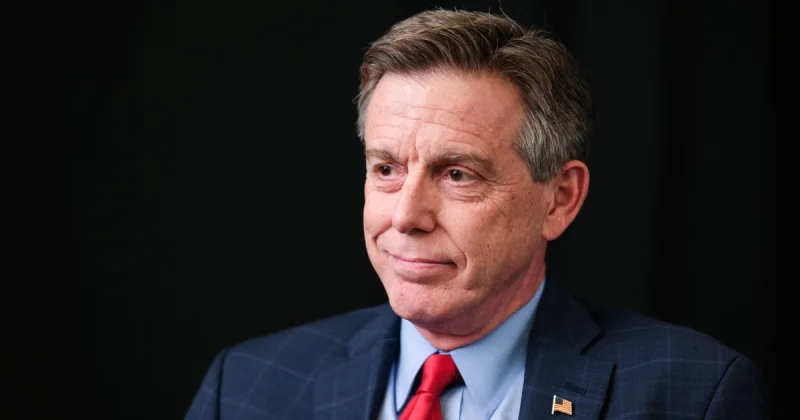
Gentner Drummond and Mike Mazzei will meet in a runoff for the Republican nomination for governor of Oklahoma after Tuesday’s primary ended without a majority winner. NBC News projected the second round after the nine-candidate field split nearly evenly at the top.
For Drummond, the result keeps him in the hunt for a statewide office in Oklahoma at a moment when the race could have been settled outright. He and Mazzei each took about a quarter of the vote, enough to finish ahead of the other seven GOP candidates but not enough to avoid another ballot.
Drummond is an attorney and rancher from Hominy, and he has built his campaign around a résumé that also includes service as an Air Force veteran and work as a banker from a prominent family. He started the race with a $2 million loan in April and added $500,000 more in late May, then raised more than $340,000 in individual contributions and $12,000 from political action committees. Mazzei, by contrast, leaned heavily on his own money and loans, putting nearly $7 million into a campaign that raised more than $11 million overall.

The split matters because Mazzei had Donald Trump’s endorsement just over two weeks before primary day, a prize that normally carries real weight in Republican politics. Trump won every county in Oklahoma three times in a row, and the GOP has carried Oklahoma in every presidential election since 1968, yet the endorsement did not clear the field for Mazzei. Drummond advanced anyway.
The runoff now decides who will carry the party banner into the general election for governor, with Kevin Stitt term-limited after being elected in 2018 and re-elected in 2022. Drummond has already shown he is willing to push against his own party, including on efforts to integrate religion into schools, and he sued to block a proposed $4 billion aluminum smelter project he said could harm the environment and agriculture. Mazzei, a former state senator and financial planner, campaigned on eliminating state income taxes, expanding property tax relief for senior citizens and veterans, and creating a literacy initiative for Oklahoma.
What comes next is now the only unanswered date that matters: the runoff itself. The winner will need to convert a roughly divided primary electorate into a majority and prove that Oklahoma Republican voters are willing to settle on a nominee after a race that money, endorsements and national politics could not decide on the first try.
