


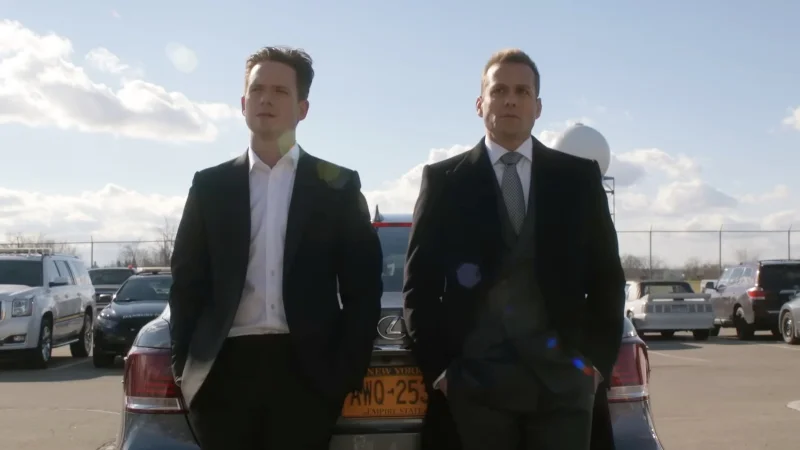
Usa Network broke its own rule against ensemble shows when it decided to keep Harvey Specter and Mike Ross inside Pearson Hardman instead of sending them out of the firm. That choice helped turn Aaron Korsh's original Suits pitch into the series that premiered in 2011 and ran for nine seasons.
That decision is drawing fresh attention now because Suits surged back into the conversation after it landed on Netflix in 2023 and sparked talk of a potential reboot. For readers looking up Usa Network today, the interesting part is not just that the network made an exception, but that it did so for a show that would later become one of its best-known successes.
Korsh has said he was still learning the business when he first pitched the show. He described the original take as one in which Harvey and Mike leave the firm. His reasoning was simple: he believed Usa Network only did two-person shows, so he assumed the pair had to be taken out of the corporate-law setting to make the concept work.
Jeff Wachtel pushed back. He said he was puzzled by the idea of having the characters leave Pearson Hardman, and he reminded Korsh that the network did not do ensemble shows. But the logic of the network's own history was already starting to bend. Monk, which premiered in 2002, averaged over 4 million viewers during its run, won eight Emmy Awards and drew over 9 million people for its finale in 2009. Psych followed in 2006, debuted as the highest-rated scripted premiere of the year with over 6 million viewers and kept an audience of about 2 million across eight seasons. Those smaller-cast successes helped define Usa Network's earlier Blue Sky era, and they also explained why the channel had been cautious about a larger cast.
Then Wachtel changed his mind. He told Korsh, “But maybe we should. Leave them in the firm,” and the show kept Harvey and Mike in the New York City corporate law world at Pearson Hardman. Korsh said he was overjoyed. That one reversal is the reason Suits became more than a two-person setup: instead of a pair breaking away from the firm, the series grew around the friction inside it.
That shift mattered because it gave Suits room to operate as a broader workplace drama without abandoning the chemistry that made the premise work. It also reveals the irony at the heart of the show's origin: Usa Network said it did not do ensemble shows, then approved one anyway when the alternative no longer looked as strong. The remaining question is not whether the network made the right call; the run, the streaming surge and the reboot chatter already answer that. The question is how close Suits came to being a very different show before one executive decided the firm itself was where the story belonged.
