


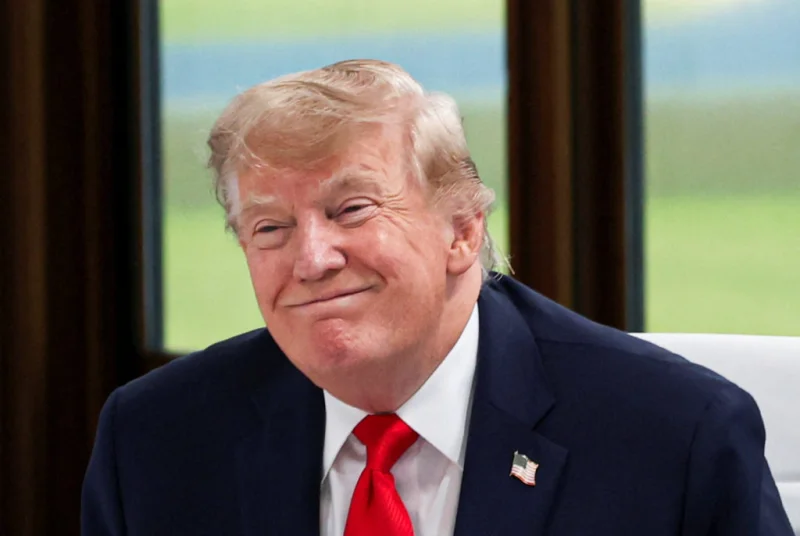
Donald Trump said Tuesday that he would send the Iran deal to Congress for review, putting the agreement back under the kind of scrutiny that can slow it down, reshape it or expose how little support it has on Capitol Hill. He made the remark at the start of a meeting with Sheikh Mohammed bin Zayed Al Nahyan on the sidelines of the G7 summit in the French Alps.
Trump did not sound hesitant. He said he liked the idea, then added that he meant who would not approve it. That line mattered because it turned a policy question into a public signal: Trump was not just entertaining the move, he was inviting Congress into it. For readers following Trump news, that is the point at which a deal stops being only a diplomatic arrangement and becomes a political test.

The question now is what, exactly, would be sent over. Republicans on Capitol Hill want Trump to provide more information about the agreement between the United States and Iran, and that request goes to the core of how much lawmakers can judge if they do not know the terms. Without the details, Congress is being asked to weigh a deal it has not fully seen, a setup that invites delay as much as approval.
That is also where the split inside Republican ranks shows up. Some Republicans on Capitol Hill are skeptical that the deal can deter Iran from pursuing a nuclear weapon, which means Trump is not only dealing with a demand for more information but with doubts about whether the agreement does what it is supposed to do. His openness to sending it to Congress may please lawmakers who want a formal review, but it does not answer the harder question of whether the terms are strong enough to hold together under scrutiny.
Trump’s comment leaves the next step clear, even if the timing is not. If he follows through, Congress will get a closer look at a deal that already has skeptics asking whether it can work on its own terms. If he does not, the pressure from Republicans on Capitol Hill for details will only grow sharper, because the issue is no longer whether the agreement matters but whether the White House is prepared to explain it.
