


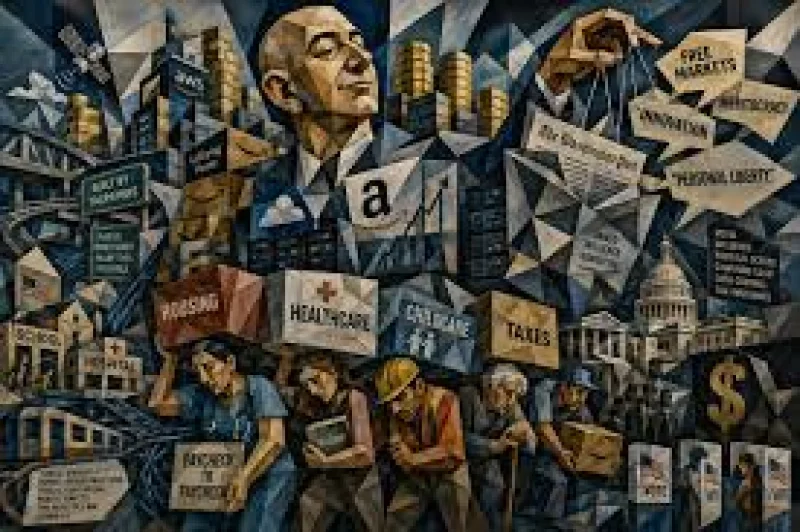
Jeff Bezos said America should stop looking for villains in the wealth debate and start digging for the causes underneath it. In a May CNBC interview from Blue Origin’s Florida facility, Bezos framed the argument around what he called “kind of a tale of two economies,” with some Americans doing very well and others struggling to pay rent and groceries.
That is why the Jeff Bezos income tax proposal search is drawing attention now: Bezos was asked about wealth inequality in the middle of a live debate over how to deal with it, and his answer was not a tax slogan or a political attack. It was a process. He said people should focus on understanding why problems exist in the first place, because blame may satisfy the moment, but it does not change the outcome for families trying to cover basic costs.
Bezos said the same logic that drives Amazon’s internal problem-solving should be applied more broadly. When the company runs into trouble, he said, it uses the “five whys” to keep pressing until it reaches a root cause, then fixes that root. He called that a “real solution” because, in his view, it keeps the same problem from coming back. The pitch is simple: do not treat inequality as a fight over labels; treat it as a problem that can be traced, tested and solved.
That framing cuts against the way wealth debates usually unfold. Bezos said public argument often turns into “picking a villain and pointing fingers,” but he said that approach “doesn’t solve anything.” He argued that helping the Americans who are struggling means identifying the real causes behind the gap, not just naming who should be blamed for it. The friction is obvious: the remarks are being discussed in the shadow of a tax debate, yet Bezos steered the conversation away from taxes as a political weapon and toward diagnosis as the first step.
Amazon’s size gives that argument extra weight. The company is one of the world’s most valuable businesses and helped reshape retail and cloud computing, which makes Bezos’s comparison land as more than a business anecdote. His message from Florida was that a serious answer to inequality, whether in business or in society, starts with root causes. What remains unanswered is what policy solution, if any, he sees flowing from that diagnosis.
