


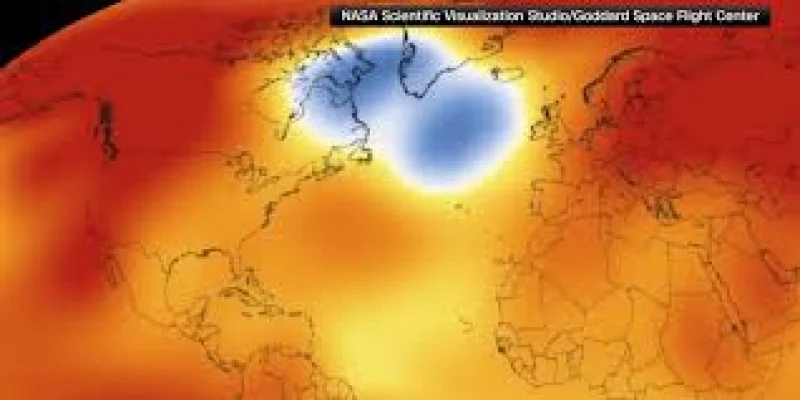
Monitoring of the Atlantic Meridional Overturning Circulation is under acute threat of being discontinued, even as scientists say the ocean system it tracks is central to Europe’s climate future. Penny Holliday, who co-wrote a warning on the issue, says cutting the funding would leave society “unaware, unprotected and unprepared”.
The reason the alarm is sounding now is simple: the measurements being taken today are the best direct benchmark researchers have for a system that moves heat from south to north in the Atlantic Ocean and helps regulate global climate. Holliday argues that governments can spend €1bn to monitor space for asteroids, while not committing a fraction of that amount to track a threat that is closer, more likely and already here on Earth. The risk of a civilisation-ending asteroid strike is close to zero, she and her co-authors say, yet the monitoring network built for AMOC has no equivalent guarantee of support.
That network did not emerge from a permanent programme. Systematic monitoring began only two decades ago, when a handful of visionary researchers in different countries patched together nationally funded projects to start taking regular measurements. Those observations are now a benchmark for climate models, and that makes them hard to replace if the system is allowed to lapse. In the background to the debate is a stark scientific warning: under current climate change, AMOC is projected to weaken enough to radically alter weather and drive sea level rise in Europe.
There is also a problem that cannot be solved by ending the measurements and hoping for the best. Some newer studies, using approximations such as historical sea surface temperature data, have added to the sense that AMOC may already have weakened. But the lack of long-term direct observations means the evidence remains uncertain, which is exactly why the monitoring matters. Without it, scientists would be trying to judge one of the planet’s most important circulation systems with too little direct evidence to tell whether change is already under way.
Holliday’s warning is therefore not just about a funding line; it is about whether Europe chooses to look away from a climate system that can affect food security, coastal flooding, storms, energy demand, migration, infrastructure planning, health, prosperity and culture. If AMOC collapses, she says, Europe would experience climate change up to 10 times faster than today. The immediate question is not whether the threat matters. It is whether the money and the institutional will exist to keep watching before the next change is missed.
