


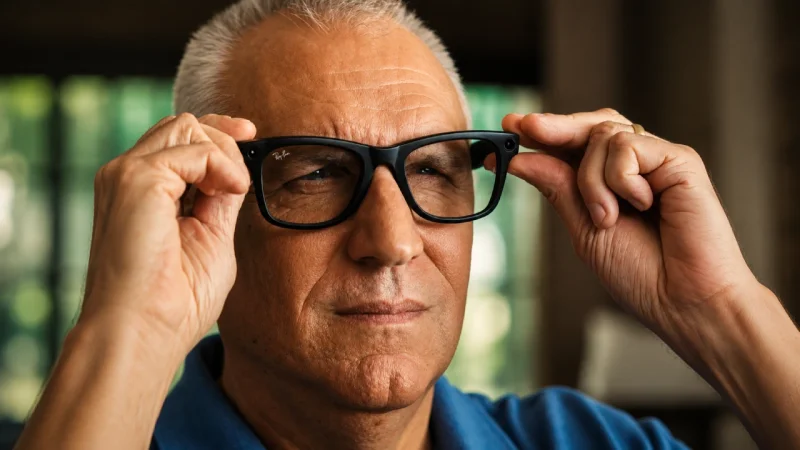
Meta Platforms has started a program to give free Ray-Ban Meta smart glasses to 130,000 blind US veterans, putting a consumer wearable directly into the hands of a group that has long needed better daily navigation tools. Mark Zuckerberg announced the campaign in an executive statement, and the rollout is already set up outside the Department of Veterans Affairs supply chain.
The timing matters because the program is not a pilot for a few dozen users. At retail, the base model costs $299, so the inventory pool is worth more than $38 million if every eligible veteran eventually receives a pair. That scale makes this more than a charitable gesture. It is a large, targeted deployment, and it arrives with a clear path for veterans to request the hardware through the BVA web portal.
The glasses use Meta AI, a built-in camera and open-ear speakers to turn real-time visual information into spoken guidance. In practical terms, that means the device can translate live spatial scenes into localized vocal strings, giving blind users a way to hear what the glasses are seeing as they move through the world. The campaign is framed as an accessibility effort, but it also routes distribution through regional veteran groups and TechSoup, not through the normal federal procurement lane.
That separation is the most revealing part of the launch. By moving the program outside the Department of Veterans Affairs supply chain, Meta avoids the slower machinery that usually governs veteran equipment and puts the logistics in the hands of advocacy and distribution partners. At the same time, the company says the glasses help seed its multi-modal AI model with thousands of hours of real-world navigation data, which means the product is not only being given away — it is also being trained by the people using it.
What remains unsettled is how far the promise will go after the first requests are filed. The announced number covers 130,000 legally blind military veterans living in the United States, but the source does not spell out how many will apply, how quickly the hardware will move, or what happens if support changes for older devices over the next 24 months. For now, the clearest fact is that blind veterans have been offered a free tool with real-world utility, and the next question is how many will actually keep it in hand.
