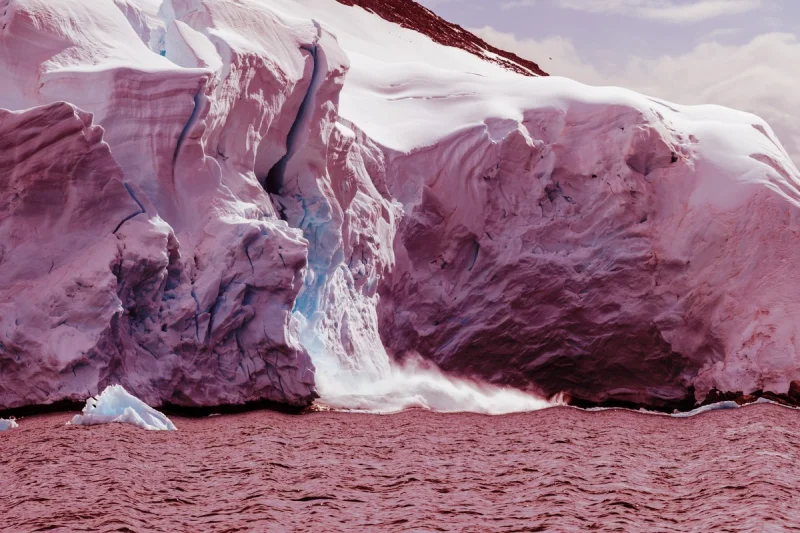
Antarctica’s Trinity peninsula just logged a June reading that looked more like spring than the dead of winter. Researchers recorded temperatures as high as 15.4 degrees Celsius on June 6, and Luis Muñoz said he climbed to the top of the Collins glacier last weekend to find rain, softening ice and ground that had already begun to give way.
The reading was about 20C above normal for that time of year, and it came as parts of Antarctica ran 36 degrees Fahrenheit above average through June. Muñoz said temperatures at the glacier rose so much that “everything outside melted,” a sharp break from the usual conditions he described, when there is typically 20cm of snow and a lot of ice on the ground.
What made the episode stand out was not just the number, but where and when it landed. The northern edge of the continent should have been accumulating snow, not shedding surface ice, and Muñoz said the rain itself was warm enough to melt the top layer of the glacier as he moved across it. That kind of surface damage matters because it shows how quickly a brief spell can change the state of the ice even before a season has properly turned.
Raúl Cordero said the heatwave was driven by extremely strong westerlies, winds he said have been occurring with increasing frequency since the 1980s and are linked to climate change. He also pushed back against any claim that the episode by itself spells the end of the continent’s ice, saying the warmth is severe but not enough on its own to destroy Antarctica’s ice.
That is the point that keeps the story from becoming a simple record-temperature headline. The warmth is real, the melting is visible and the weather pattern behind it is becoming more common, but the damage is unfolding within a much larger system. Nicholas Golledge warned that if global temperatures rise by about 3.5 to 4C above pre-industrial levels, more surface melting would leave ice shelves far more vulnerable to rapid collapse and sea-level rise.
The wider picture is already uneasy. Antarctica is losing glacial coverage, and scientists have been tracking the Thwaites glacier, often called the doomsday glacier because of fears its failure could batter coastlines around the world. Researchers did not manage to place long-term monitoring equipment underneath it, but they did take snapshot readings from the water below, which came back warmer than models had assumed. A recent study also found that ongoing melt-off could rise to ten times its current levels before 2100 unless carbon emissions are sharply reduced.
For now, the immediate question is not whether a single heatwave can erase Antarctica’s ice. It cannot. The sharper concern is that warm spells like this are arriving often enough, and early enough, to keep turning a frozen surface into one that can melt, rain on and weaken before the season has a chance to recover.