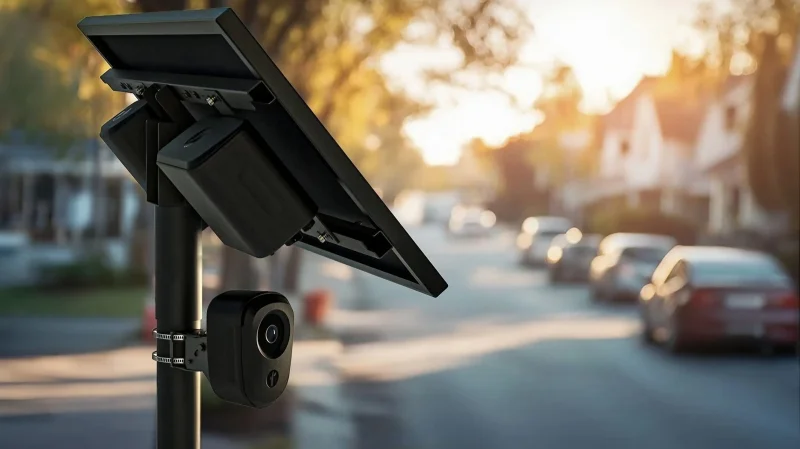
Flock Safety’s roadside cameras are built to do more than read license plates. The company says its system can identify a car by its make, body style, roof rack, bumper stickers and decals, then turn that into a searchable trail for police.
That is why Flock keeps coming up now. The Atlanta-based company says more than 80,000 Falcon cameras have been installed across the U.S., and the scale of that network means the search tools are not niche add-ons. They are part of a surveillance system already in wide use by police and law enforcement agencies.
Flock’s own descriptions show how far the system reaches. The Falcon camera can catch a car moving faster than 60 mph and see across two lanes of traffic. The Falcon Long Range variant is meant for traffic blowing past triple-digit speeds while watching a third lane. Flock says a half-glimpse of a car can be enough for police, which makes the plate optional inside its Vehicle Fingerprint feature. The company also pitches Nova as a search engine built for cops, pulling in open-source intel, public records and dispatch system information.
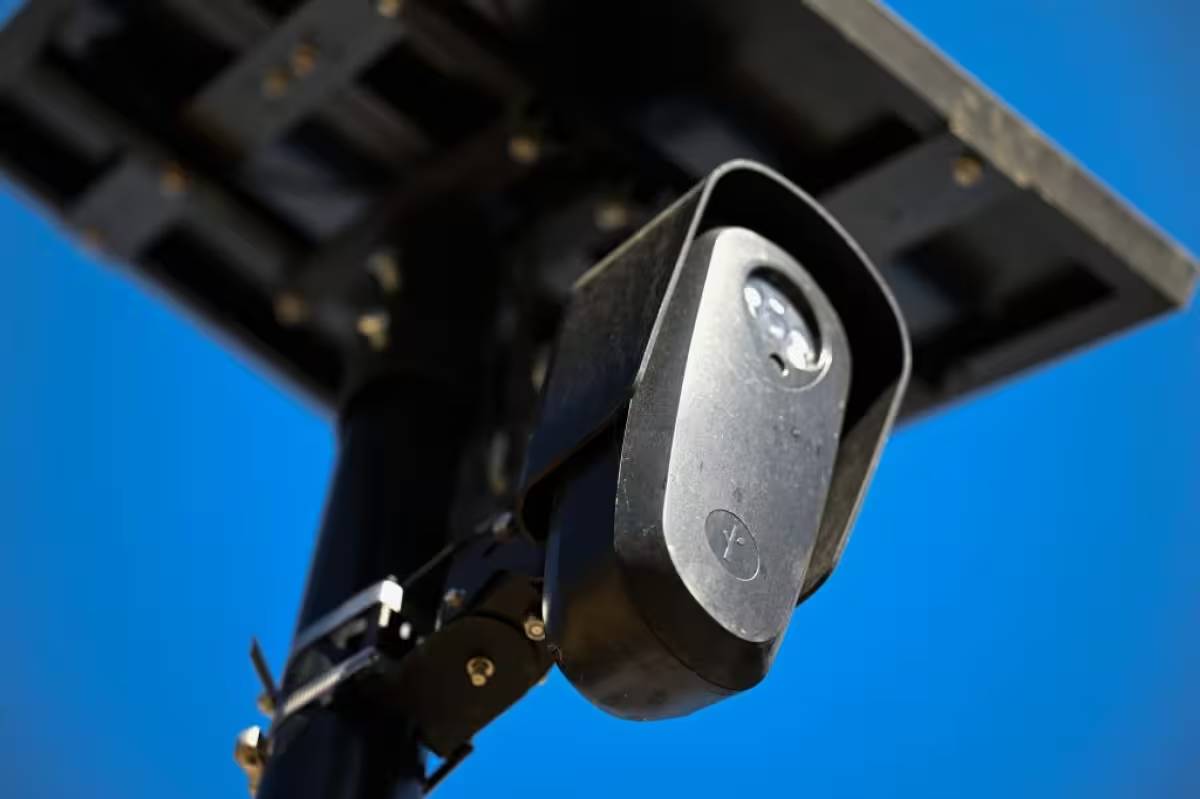
The tools do not stop at one camera or one search box. An officer can look for vehicles traveling together. Multi geo search stitches a single car’s appearances into a trail across different times and places. Flock’s Drone as First Responder program launches drones the moment a 911 call lands, and the drone can trail a person or car at up to 60 mph. Freeform goes further still, letting a cop type a plain description, down to what someone was wearing, and search for a match. Flock says it does not run facial recognition.
That wider reach is also what makes the backlash harder to ignore. In Oakland, 293 automatic license plate readers wired directly into the police feed produced more than 638 million reads in 2025, but only a small share flagged a real crime and most of those were stolen plate alerts. In Sedgwick, Kansas, a chief ran his ex-girlfriend’s plate 164 times in four months before losing his badge after the abuse was discovered. In Norfolk, Virginia, a man learned that Flock had logged his car 526 times.
The question now is not whether Flock can track more than plates. It clearly can. The harder question is how much of that tracking police are allowed to keep using, and how much more of the public’s movement will be folded into a system that already runs at massive scale.