


Morocco enters the Africa Cup Of Nations ranked seventh in FIFA’s official standings, the highest mark it has ever reached. For Walid Regragui, that number is more than a line on a chart; it is proof that the team’s 2022 breakthrough was not a one-off.
The ranking matters now because Morocco is no longer arriving as an outsider hoping for a surprise. It comes in after reaching the World Cup semifinals four years ago, the first time the country had ever done so and only the third time a team from outside Europe or South America had reached the final four. Before that run, Morocco had advanced beyond the World Cup opening-group stage only once, in 1986, and it was knocked out immediately.
Regragui has leaned into that shift in tone. “We want to fly Africa’s flag high just like Senegal, Ghana, Cameroon,” he said, adding: “I think now the world is with Morocco.” That message fits a squad built with contributors from Paris Saint-Germain, Real Madrid and Manchester United, a lineup that looks less like a regional story and more like a team assembled for the highest level.
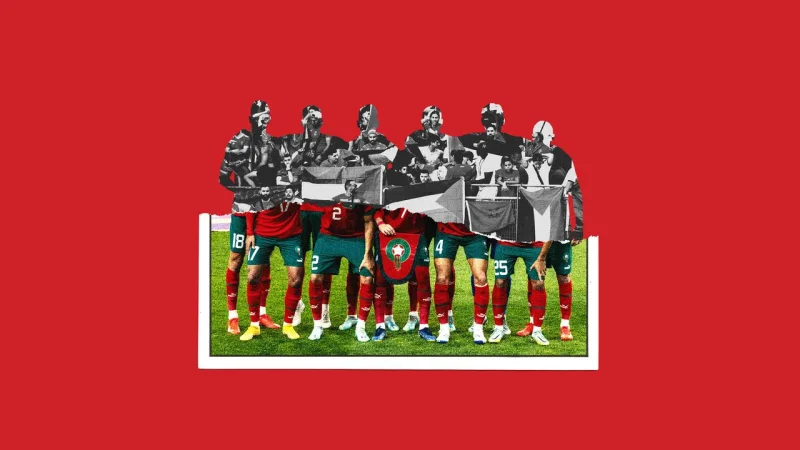
The wider reaction has only sharpened the sense that Morocco has become something bigger than one national side. Players celebrated victories with Palestinian flags and also displayed the Amazigh flag, a mix that reflected how the team was being read across identities and borders. Commentators described Morocco as either the first African or the first Arab country to reach the World Cup semifinals, and both descriptions held true in a way that explained its appeal: the team fits, and resists fitting, more than one label at once.
Saad Moufakkir, speaking for that feeling of disbelief turned into expectation, said, “We didn’t know that it was our moment.” He also said, “People say 2022 was a miracle, but now it’s the beginning of a new football power. Expectations have changed completely.” That is the real shift facing Morocco now. Last year its youth team won the most recent Under-20 World Cup, and the senior side arrives with a ranking that says the rise is continuing, not fading.
The unresolved test is simple: a seventh-place ranking does not win matches by itself. Morocco has moved from underdog to contender, and the next step is to show that the standing reflects what it can do when the tournament starts to bite.
