


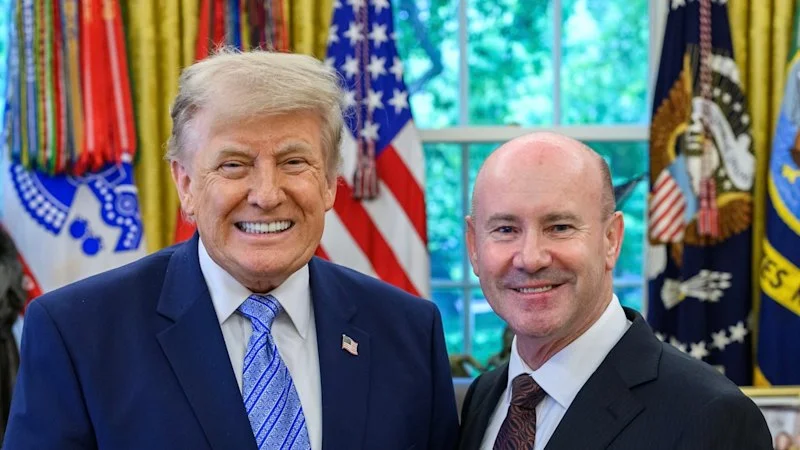
Australia’s new ambassador to the United States, Greg Moriarty, has begun his Washington posting with two immediate messages for the Trump administration: AUKUS still has strong backing in US official circles, and Canberra will fight a proposed tariff rise on Australian goods.
Moriarty, who formally presented his credentials to Donald Trump at the White House late last month, said every American official he had spoken with about the submarine pact had assured him of their support. He also said Australia would respond to the tariff plan “robustly but respectfully,” calling the measure unjustified and out of step with the long-standing US-Australia free trade agreement.
The timing matters because the tariff proposal would lift duties on Australian goods to 12.5 per cent from 10 per cent, a move that would hit exporters and test a trade relationship that has been politically durable for years. The Trump administration has linked the proposal to claims that Australia has failed to impose and enforce a ban on imports made with forced labour overseas.
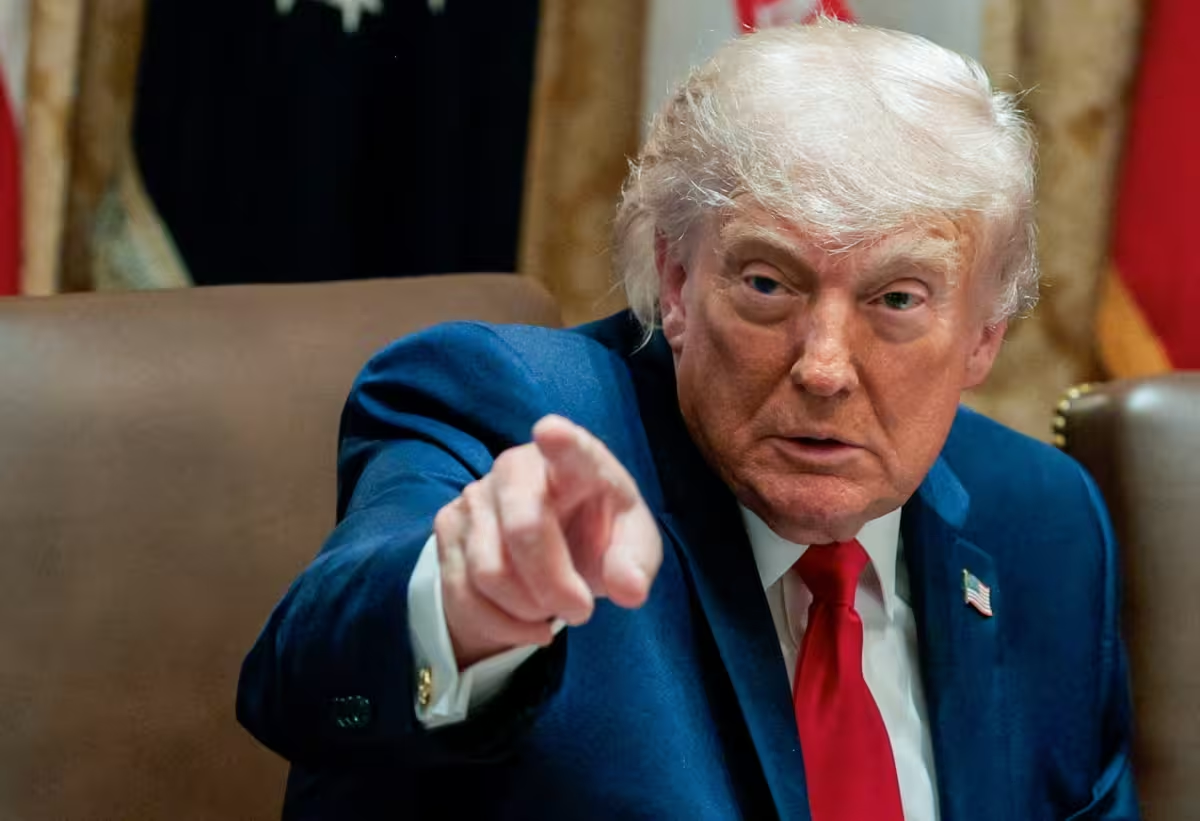
For Moriarty, the first weeks in the job have been about defending one of Australia’s biggest security commitments while also handling a trade fight that could turn quickly. He said he had been struck by how strong the US commitment to AUKUS remains, and that he had met officials across the administration who were uniformly supportive.
That confidence sits beside a more uneasy note from another former ambassador. Joe Hockey said he was “a little nervous” about the Virginias after speaking with people on Capitol Hill, even as Kevin Rudd has insisted there is “zero possibility” of AUKUS coming unstuck. The package now includes confirmation from Washington that all three AUKUS submarines will be in-service or second-hand, underscoring how much of the deal is already embedded.
Trump told Moriarty that Australia was one of his “favourite countries” and called Prime Minister Anthony Albanese his “good friend,” while also saying Australia has been a very good partner. He did not raise Australia’s role in the war in Iran or the Strait of Hormuz during the meeting. For now, the question is not whether Canberra will object to the tariff proposal — it has already signalled that it will — but whether Washington follows through on it.
