


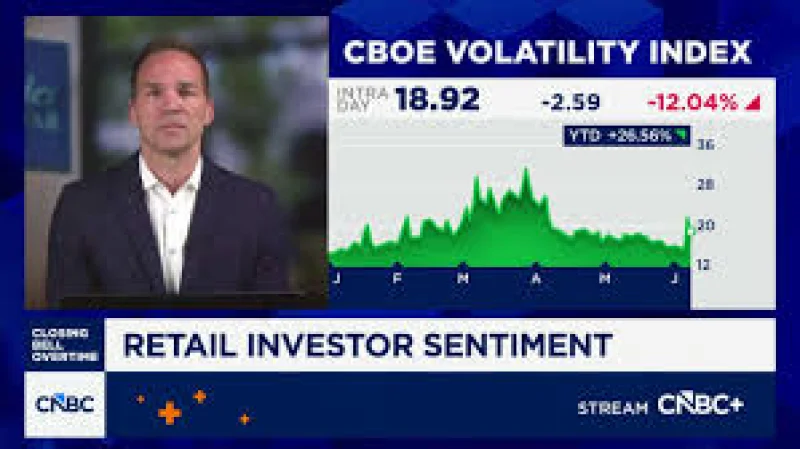
Retail investors stepped back into the market in May, and Charles Schwab said many of them did it with options. Joe Mazzola pointed to more put selling and upside call buying as traders looked for ways to stay exposed without taking on as much outright stock risk.
The move matters now because Schwab’s latest Trading Activity Index report captures how small investors are behaving while volatility stays elevated. Mazzola said the shift was showing up in AI trade leaders and high-flying memory chip names, with Micron and Sandisk among the stocks seeing a lot of put selling.
That activity fits a broader return to risk, but not a simple one. Mazzola said investors were trying to participate in upside while optimizing portfolio allocations, and he said the market was still being driven by geopolitical risk, which for many clients had overtaken inflation as the main concern.
He also said the backdrop is making single stocks move harder than they used to. With 33 to 34 percent of the S&P 500 tied to tech, he said implied volatilities were “skyrocketing” within individual names, and part of that volatility was coming from retail investors themselves as they bought upside calls. In his view, that makes the tape more vulnerable to abrupt swings when sentiment changes.
Mazzola pointed to one recent jolt to make the case. After a tweet came out, he said the S&P 500 pulled down from 7450 to 7200 and change, a move that came after the index had been hovering around its 21-day exponential moving average. “When the tweets come out, I think that moves markets,” he said.
For Schwab, the open question is whether May’s options-heavy trading is a one-off response to fast-moving headlines or the start of a more durable change in how retail investors want to play the market. Either way, the flow is already clear: buyers are not leaving, but more of them are choosing the levered, more tactical path back in.
