


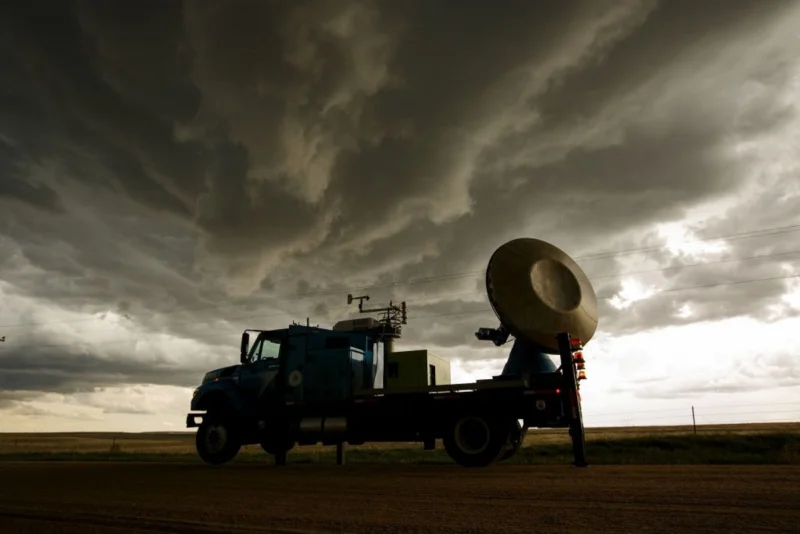
Wichita Falls became the first Texas city to get an experimental Doppler radar system in 1959, a step that placed the city in the early testing ground for tornado science. The equipment was meant to help meteorologists study storms more efficiently, not to warn people before a tornado arrived.
The renewed attention comes this week after a report from KSN-TV in Wichita, Kansas looked back at early Doppler technology and tornado sirens, just as some tornado sirens in Wichita Falls have been having issues recently. For people in a city with a long tornado history, the timing makes the old question feel new again: what can warning technology do, and what can it not do?
The National Weather Bureau had already deployed a Doppler in Wichita, Kansas in 1958 before bringing one to Wichita Falls the next year. The early system could measure wind speed more accurately during a tornado, which gave researchers a better picture of what was happening inside a storm. But it could not detect incoming tornadoes, leaving the most important warning problem unsolved.
That gap mattered in Wichita Falls, where Weather.gov’s history of major tornadoes begins with storms that touched down in 1888 and where April 10, 1979 remains the city’s most famous tornado date because of the damage it caused. The city’s connection to Wichita, Kansas runs deeper than the radar history, too. Wichita, Kansas invented the tornado siren, and the two cities are linked by the old phrase, “As Falls Wichita, So Falls Wichita Falls.”
For now, the practical issue is still the one on the street, not the one in the archives. Some of Wichita Falls’ sirens are malfunctioning, but no repair plan or timeline has been confirmed publicly in the material at hand, leaving residents with a familiar blend of history, technology and uncertainty as storm season awareness lingers.
