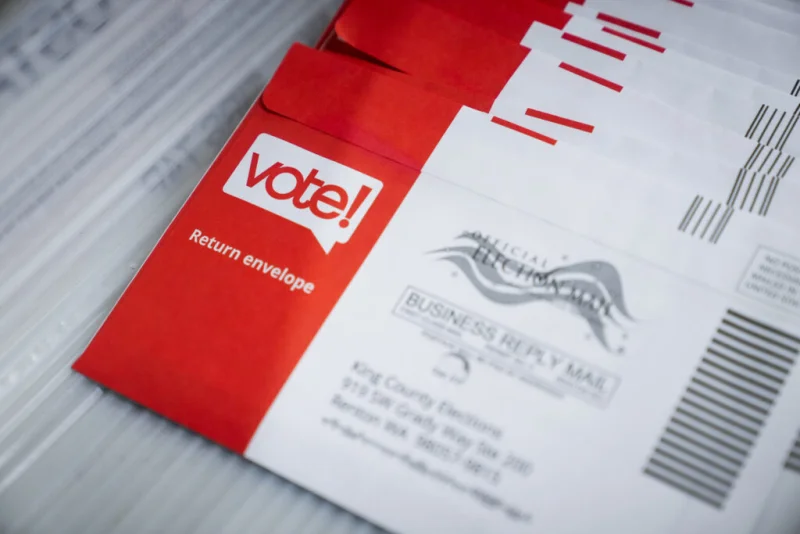
A federal appeals court on Thursday moved fast on the challenge to President Donald Trump’s order targeting mail-in voting, expediting Democratic plaintiffs’ effort to block it and putting the case on a tighter track before the 2026 midterms. The D.C. Circuit Court of Appeals set briefing deadlines and scheduled oral arguments before a three-judge panel as the dispute over the usps mail ballot proposal accelerates.
The timing matters because the administration is not waiting. After U.S. District Judge Carl Nichols declined last month to issue a preliminary injunction, saying the challenge was premature, the Postal Service proposed a rule to implement part of Trump’s March order. That proposal would require states to provide information about voters receiving mail-in or absentee ballots, attach unique barcodes to ballot envelopes and submit the material through a federal ballot-mail portal. It would not apply to primary elections or to ballots covered by the federal law protecting military and overseas voters.

Trump’s order directs the Department of Homeland Security to work with the Social Security Administration to create lists of verified U.S. citizens eligible to vote in each state, and it tells the Postal Service to restrict delivery of mail-in and absentee ballots based on approved lists submitted by states. Voting rights advocates, Democrats and state officials have warned that the plan could disrupt election administration and wrongly block eligible voters from receiving ballots, even as the government says it is moving ahead with implementation steps.
The appeals court’s schedule makes the next phase clear. The Democratic plaintiffs must file their opening brief by June 17. The Trump administration and Republican states defending the order have until June 29 to respond, and the Democrats’ reply is due July 6. Oral arguments will be heard by Judges Patricia Millett, Robert Wilkins and Gregory Katsas, with Millett and Wilkins appointed by former President Barack Obama and Katsas appointed by Trump; Katsas would have denied the motion to expedite.
The case now turns on how far federal agencies can go before the court decides whether Trump’s March order can stand. Last week, the Department of Justice disclosed that DHS had approved a plan to create a federal voter citizenship verification system, underscoring that the dispute is no longer theoretical. By the time the panel hears argument, the Postal Service’s proposed rule and the DHS verification plan may already have started to reshape how states handle mail ballots, which is exactly why the challenge was put on a fast clock.