


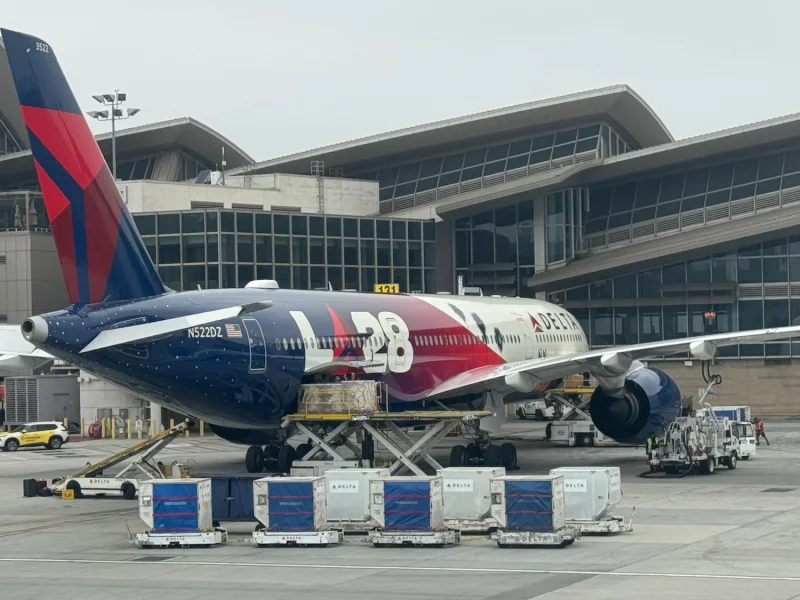
Delta Air Lines is making a public run at United in the skies over the Pacific. Peter Carter said at the International Air Transport Association’s annual meeting in Rio de Janeiro that Delta wants to become the biggest U.S. carrier for trans-Pacific travel, and that its real goal is to become the leading global carrier.
The timing matters because Delta has been adding flights across Asia and the Pacific even as United defends the larger-airline title it says it holds by revenue passenger miles. Delta carried more passengers than United in 2025, with over 200 million travelers compared with United’s 175 million, but United still dominates trans-Pacific travel and says a lot of its growth has been international.

That split is why the contest between the two airlines is not just about passenger counts. Longer flights can generate more revenue per passenger than shorter trips, which gives trans-Pacific routes a different weight in the race for scale and profit. Delta has been building up its Asia presence with Korean Air and China Eastern, while United’s network in the region runs through hubs in Tokyo and Guam and includes partners such as Air India and ANA.
Delta has already started making its push tangible. It launched a new nonstop service between Los Angeles and Hong Kong on Saturday, after beginning a new direct service between Salt Lake City and Seoul last June. United answered in May by saying it will later add year-round service between Chicago and Tokyo and seasonal service between San Francisco and Sapporo, Japan, a sign that both carriers are still widening their Asia-Pacific maps.
What Carter did not spell out is how Delta plans to turn those additions into enough trans-Pacific revenue passenger miles to catch United. Kirby, for his part, said at the same IATA gathering that international has been “gang busters” for United. For now, Delta has made its ambition plain. The harder part is closing the gap in the one measure that still lets United call itself the biggest airline in the world.
