


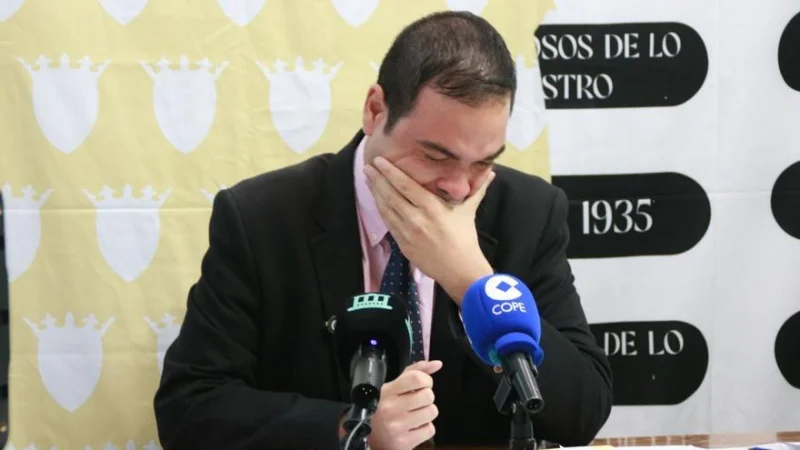
Ramón Lázaro was arrested on Monday, 8 June, in a police and judicial probe into a presumed criminal organization, then released provisionally after a judge refused to send him to prison without bail. He must now appear on the 1st and 15th of every month, and whenever a court orders it, while investigators keep working the case.
The timing matters because Lázaro is not just another name in a file. He was president of the Tudelano until his recent cese, and his arrest came alongside six others in a case that points to alleged blanqueo de capitales, estafa and fraude en subvenciones públicas. For readers searching Ejea now, the name sits at the center of a wider investigation that has moved from football politics into the world of public contracts and subsidies.
At the heart of that trail is Gestión y Eventos Lázaro, the multiservices company linked to him. It won a contract in 2022 to clean the Topas prison for one year, tendered by the Ministry of the Interior, for more than 70,000 euros. That award was nearly 20 percent below the initial budget, and the company has also just won the contract for the Villamayor swimming pools, a service it had already held through another company. In Salamanca, three awarded tenders and one rejected bid stand out, including a school-centre cleaning offer that was turned down for being abnormally low.

The sharpest clash in the case came in court. Fiscalía asked for provisional prison without bail, arguing that there was a risk of flight and destruction of evidence. The judge saw it differently and found no risk of hiding evidence, choosing release with reporting obligations instead. That decision leaves the investigation open but gives Lázaro, at least for now, room to fight a case that authorities say may involve fraudulent subsidies, invoices and services not justified.
Investigators have also reportedly intervened almost one and a half million euros transferred abroad, a figure that gives the case a scale far beyond the arrest itself. The question now is not whether the inquiry continues — it clearly does — but what the files, contracts and bank movements will show when the courts ask for the next round of explanations.
For Lázaro, the immediate future is procedural and relentless: twice a month before the nearest trial court, and again whenever judicial authority requires it. Whether that schedule is enough to keep the case contained will depend on what Policía Nacional and Fiscalía can prove from the public contracts in Salamanca and the company activity now under scrutiny.
