


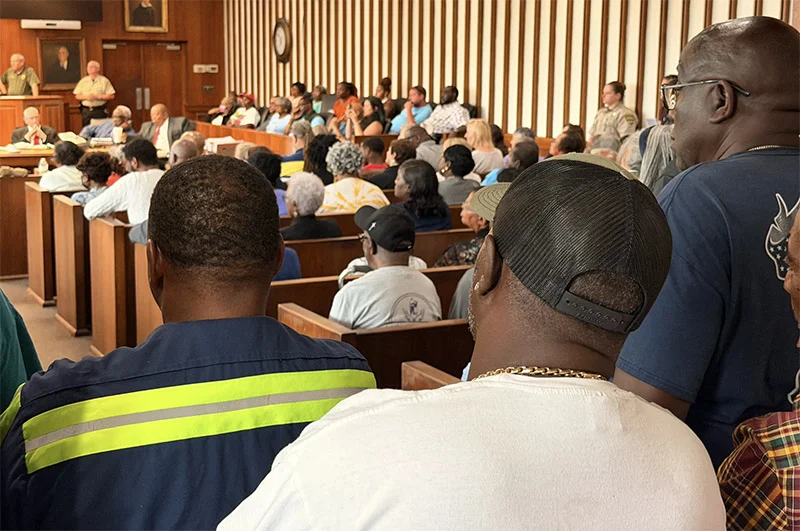
Hundreds of residents packed a Bladen County Commission meeting in Elizabethtown on a rainy afternoon this week and forced local officials to step back from a plan that would have cut the county’s board from nine members to five. By the end of the week, a separate voting fight in Jackson County had produced its own break from the party line, after one elections board member said he had been pressured by state officials over how he should vote.
The fights erupted days after the Corte Suprema’s Callais decision, which critics have described as dismantling the Voting Rights Act and widening the door to racial gerrymandering. That timing matters because both disputes centered on election arrangements that had been designed, in different ways, to give voters of color a stronger voice.
In Bladen County, Cameron McGill had proposed on May 18 to shrink the commission and end the district system that had been in place since 1988, when Black residents challenged the county’s then five-member at-large elections under the Voting Rights Act. The current map was not some recent improvisation; it was agreed to by the county board, the state legislature and voters after that challenge, and residents who came out this week argued that scrapping it would weaken representation where it already mattered most.
McGill tried to defend his plan by saying, in effect, that if something works, it should not be touched. But after the backlash grew, the commission delayed the vote until June 1 and McGill later shelved the proposal at that meeting. The result was a local rebuke, plain and public, to a change that many residents saw as an attempt to roll back the political gains of the last four decades.
The same pressure surfaced in Jackson County, where the county board of elections met June 2 to decide voting options for 2026, including whether to keep a campus voting center accessible to Western Carolina University. Jay Pavey said he had been told that state officials would do whatever was necessary to remove him from the board if he did not vote a certain way. He then broke with the board’s Republican chair and voted with Democrats for a compromise polling place.
Pavey’s account gave the dispute its sharpest edge: local officials in two counties said they were being pressed to change voting arrangements even as residents warned those changes would weaken access and representation. In Jackson County, the campus site was not an abstraction but a practical path for student voters; in Bladen County, the old district system was tied to a long-ago remedy meant to correct discrimination, not preserve a political convenience.
What happens next now turns on whether state officials keep pressing for changes in either county. The Bladen fight has already been stalled, but the Jackson County dispute still leaves open the final shape of its polling plan, and Pavey’s vote suggests that local resistance may be the first real obstacle to a broader push that began with Callais and is now testing election systems one county at a time.
