


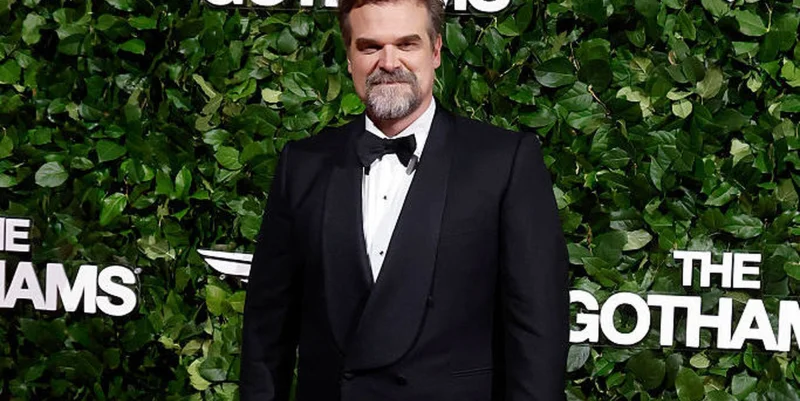
David Harbour said the fallout around Lily Allen’s West End Girl triggered a “frightening mental health emergency” at the same moment the album put his private life back in public view. In a new interview published June 10, he made clear he would not go further. “I just won’t speak about that,” he said.
The timing matters because Harbour, 51, is back in the spotlight with HBO’s DTF St. Louis, the spring 2026 series that gave him a ratings success and put him in contention for his first Emmy after two Stranger Things nominations. That renewed attention has brought the album dispute with it, and Harbour’s comments are his first direct public account of how hard the reaction hit him.

He also drew a line around what he was willing to discuss, saying he respects the right of artists to use experience in their work and that stories are complex, but adding that the album was not his experience. Allen has described West End Girl as using “artistic license” and has said, “I don’t think I could say it’s all true,” which leaves the record somewhere between confession and construction, and the disagreement over that boundary sits at the center of the fallout.
Harbour and Allen married in 2020 in Las Vegas, and their public profile rose again after a 2023 Architectural Digest tour of their Brooklyn townhouse drew more than 9 million views. Allen released West End Girl in October 2025, and Harbour said the release period coincided with the mental health emergency he described. He has long been open about bipolar disorder, giving extra weight to the way he framed the moment.
What Harbour did not say was just as important as what he did: he did not explain what specific events in the album’s public fallout led him to that description, and he did not say whether he would make any further public comment. For now, the story ends where his answer did — with the fallout named, the damage acknowledged, and the rest still sealed off.
